
By Plumber in Fraser, MI, Fraser, MI · Published · Last updated
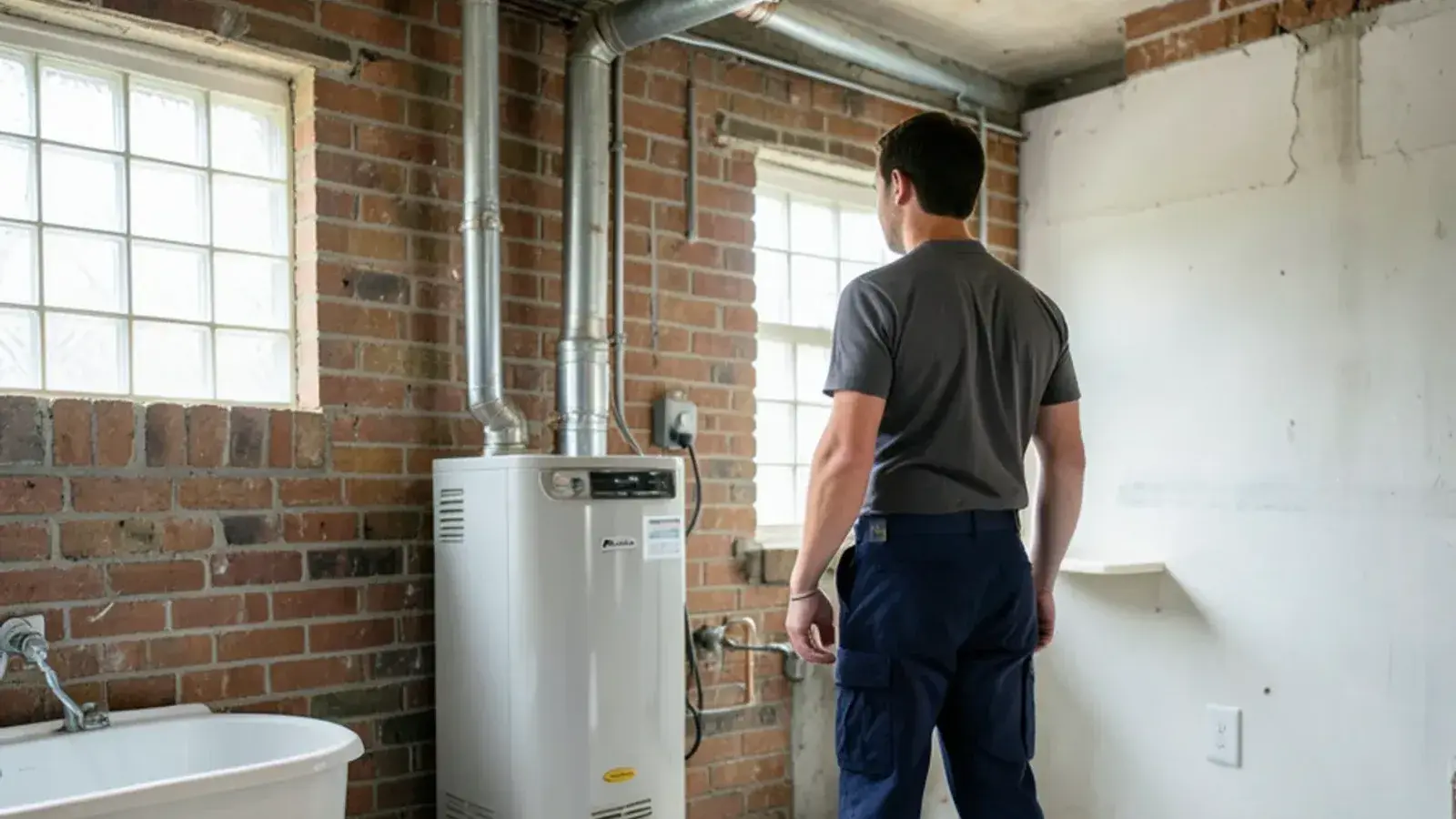
Water heater replacement cost in a Fraser house depends far more on what surrounds the tank than on the tank. Two homes on the same street can get very different quotes for the same 40-gallon heater, because one has a clean gas drop and a short vent run and the other has a shared chimney, no expansion tank and a heater wedged behind the furnace. We don't publish prices. What we can do is show you every factor that moves the number, so you can read any quote line by line.
Why two replacement quotes can look nothing alike
A like-for-like swap is the simplest job there is: same fuel, same size, same venting, same spot. Most quotes go up because one of those four things changes, or because the old install never met current code and the new one has to.
Older housing raises the odds of surprises. In Warren, the Census Bureau's 2020–2024 American Community Survey puts the median year built at 1965, and more than a third of homes date to the 1960s. In Sterling Heights, the median is 1977. A house that old has often had its furnace swapped at least once, and that history shows up at the water heater.
The factors that move the price, one by one
Fuel type and efficiency class
Staying with a standard gas tank keeps things simple. Moving to a power-vented tank, a condensing tankless unit or a heat pump water heater changes the venting, the electrical needs or both. ENERGY STAR says a heat pump water heater belongs in an interior space that stays between 40 and 90°F year-round with about 1,000 cubic feet of air around it. Plenty of Michigan basements qualify. A cramped closet doesn't.
Venting
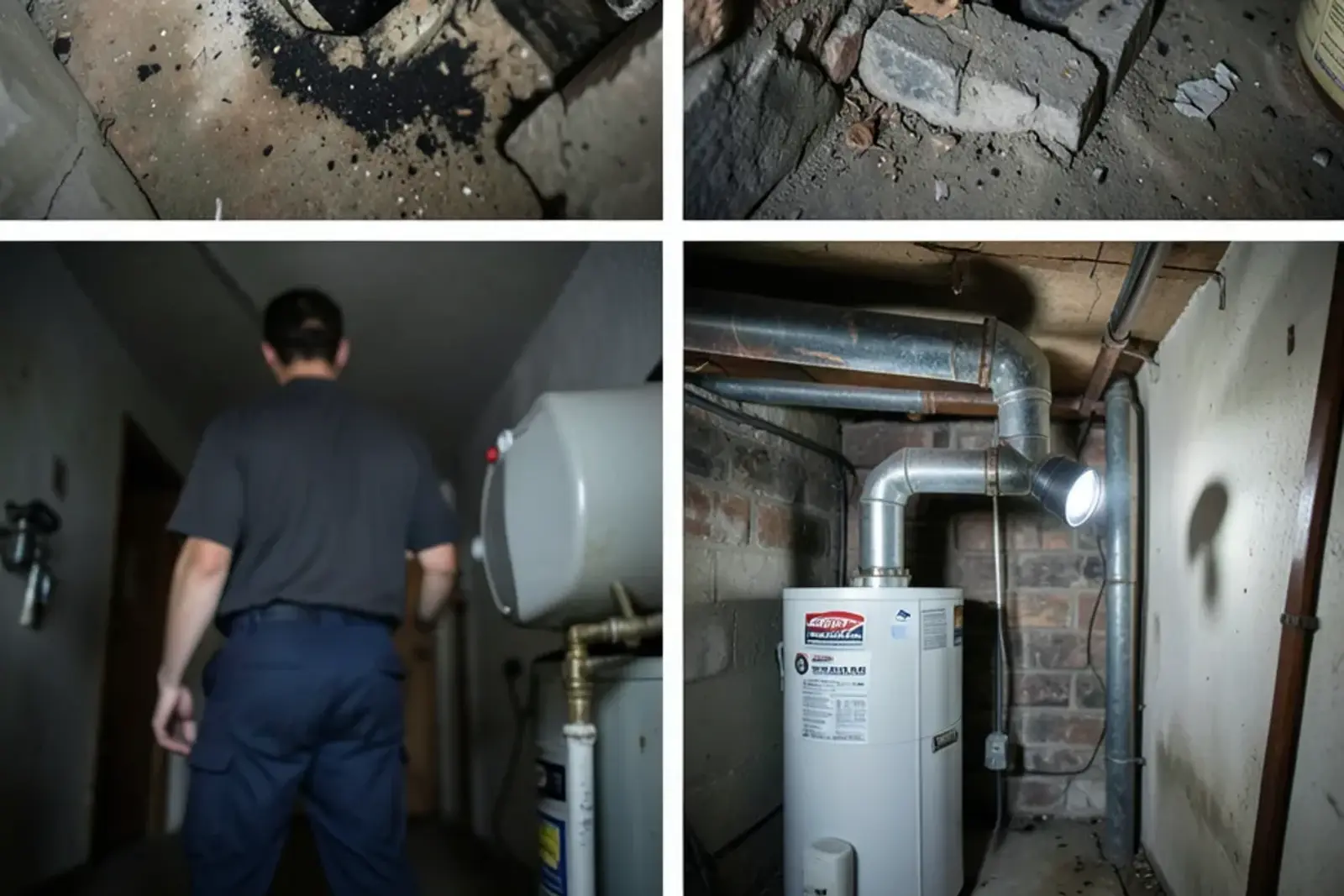
An atmospheric tank vents through a draft hood into a chimney or B-vent. If your furnace was upgraded to a high-efficiency model that vents out the side wall in PVC, the water heater may now be the only appliance left in an old masonry chimney. The installer has to confirm that chimney still drafts properly, and a liner may be needed. Fraser's fee schedule even has its own permit line for chimney liners. Power-vent and condensing units skip the chimney but need a PVC vent route to an outside wall and a nearby outlet.
Gas piping and combustion air
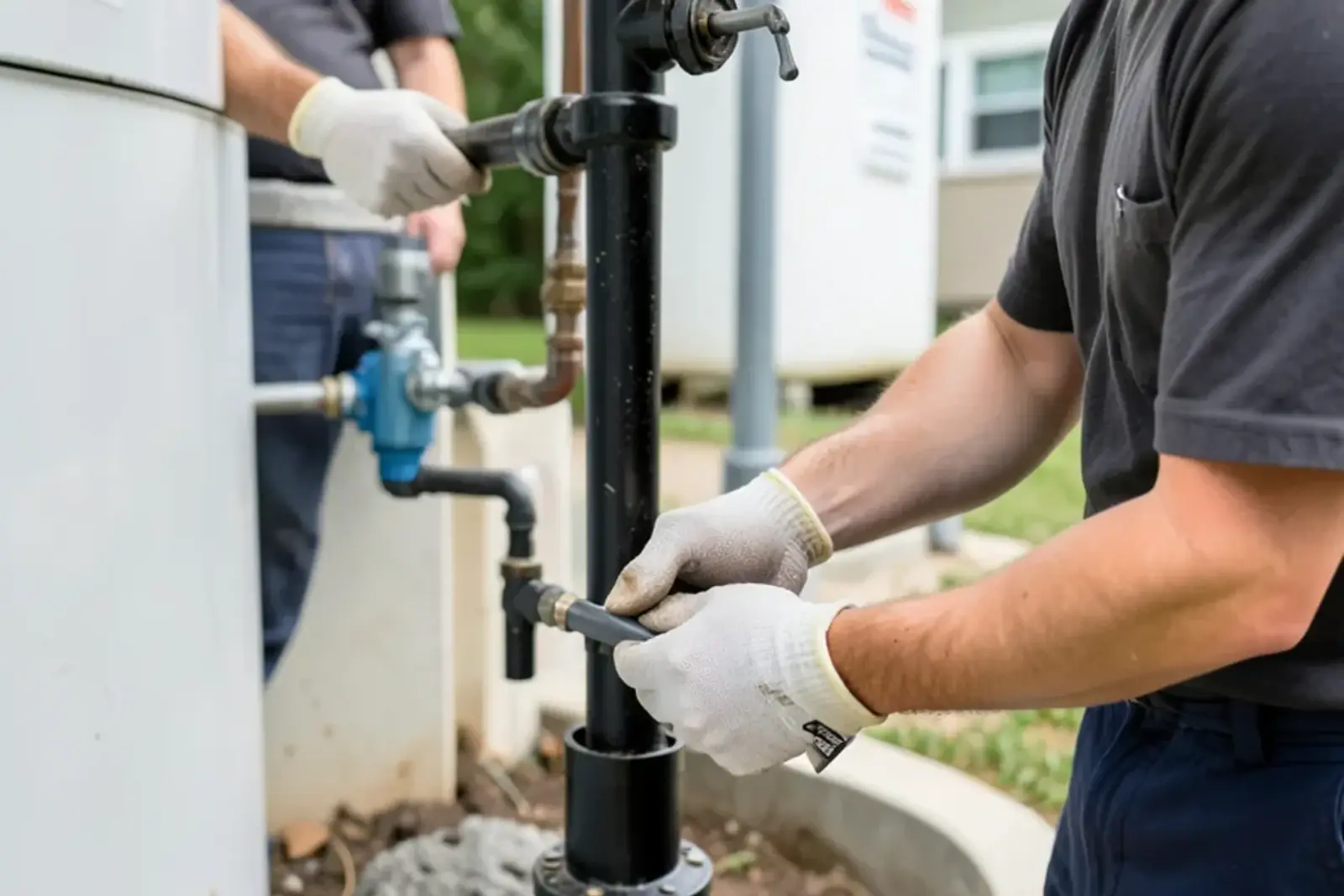
A bigger burner can outgrow the existing pipe. The manufacturer's manual for one common residential power-vent tank also calls for a sediment trap ahead of the gas valve. It spells out combustion air too: the standard method needs 50 cubic feet of room volume for every 1,000 Btu per hour of all the gas appliances in that space. A heater boxed into a small room with a furnace may need added air openings or outdoor air.
Water-side code items
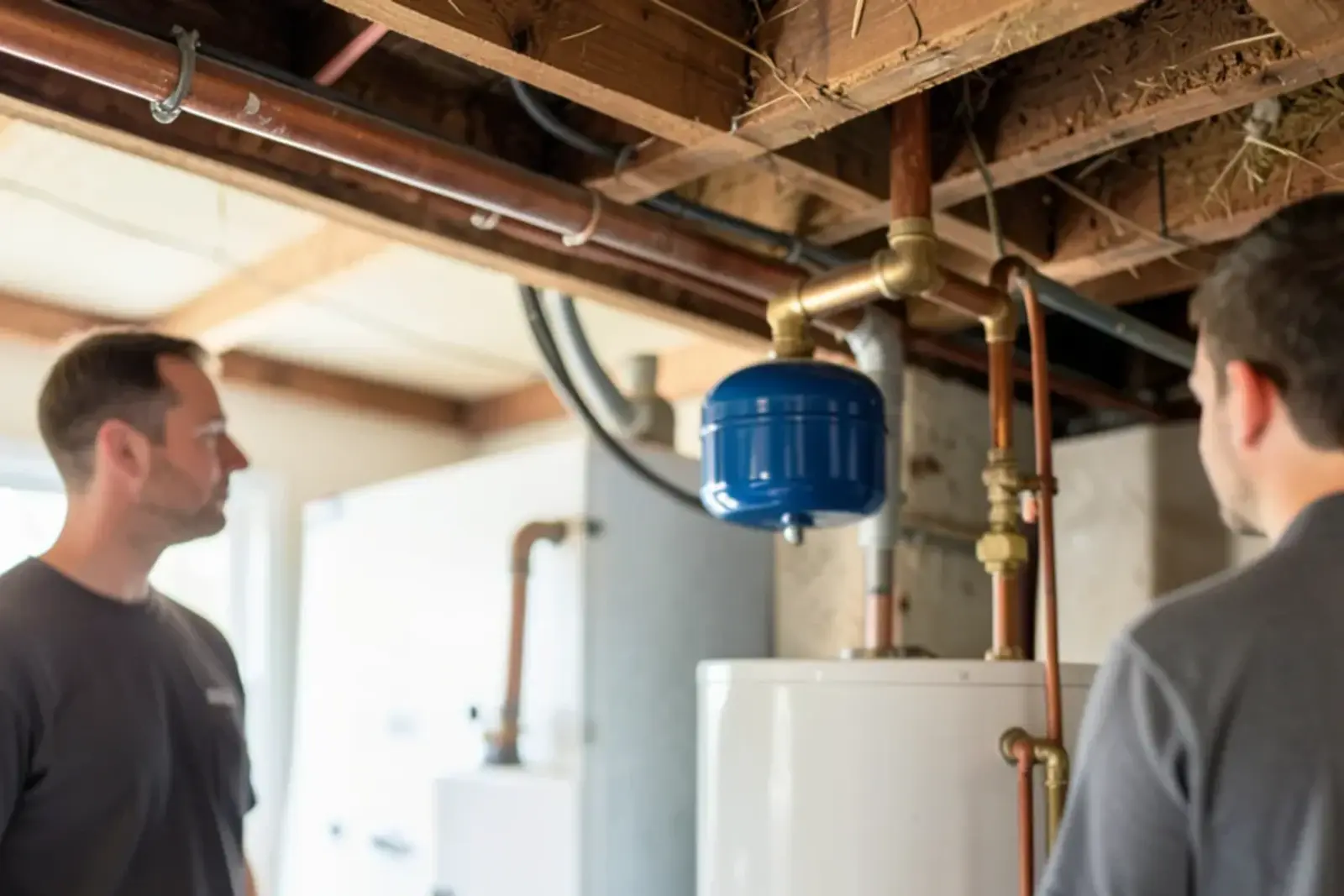
The A. O. Smith installation manual states that thermal expansion tanks must be installed on all closed water systems. If your home has a check valve or pressure-reducing valve and no expansion tank, expect one on the quote. The relief valve discharge pipe also has to run correctly. The model codes allow it to end within 6 inches of the floor or a drain, but Michigan's own amendment (R 408.30530) is stricter: no more than 4 inches from the floor, with no valves or threads at the end. An old pipe that stops a foot up gets redone.
Access and haul-away
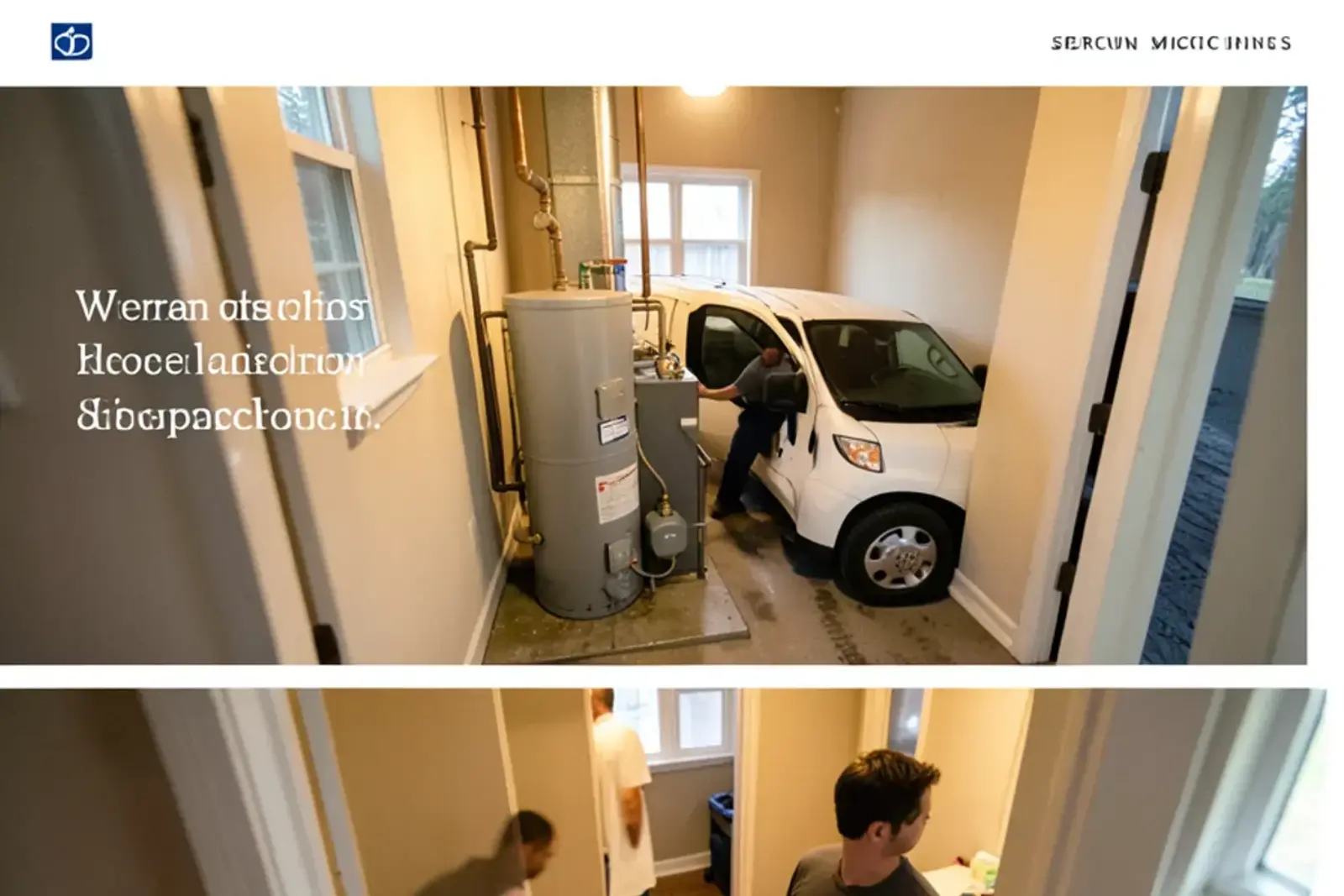
Basement stairs with a turn, a heater behind a finished wall, or a first-floor closet with an inch of clearance all add labor. So does draining a tank full of sediment that clogs the drain valve. Disposal of the old unit is usually its own line.
| Factor | What makes it simple | What adds work |
|---|---|---|
| Fuel and type | Same fuel, same tank style | Switching to tankless, power vent or heat pump |
| Venting | Existing vent sized for the new heater | Orphaned chimney, new PVC route, liner |
| Gas supply | Pipe already sized for the burner | Larger pipe from the meter, new sediment trap |
| Water side | Expansion tank and relief line already to code | Adding expansion tank, rerouting relief discharge |
| Location | Open basement, straight stairs | Tight closet, finished space, attic |
| Permits | One plumbing permit | Plumbing plus mechanical, gas pressure test |
What Fraser's permit fee schedule actually shows
The City of Fraser publishes its 2026–2027 fee schedule, amended September 11, 2026. These are city fees, not anything a plumber charges. The plumbing section lists a $30 non-refundable application fee and a $40 hot water heater line. The mechanical section lists a $40 line for gas and electric hot water heaters and $40 for gas piping up to five openings, which requires a pressure test. Starting residential work without a permit carries a $75 fee.
Which permits a given job needs is the building department's decision. Our post on water heater permits in Michigan covers what the inspector looks at. Warren and Sterling Heights residents should check their own city's schedule, since each city sets its own fees.
What we see on Fraser replacement quotes
A typical Fraser replacement is a gas tank in the basement of a 1950s through 1970s house. The things that change that quote are often smaller than the venting and gas items above, and they're easy to miss when you compare two numbers.
Timing can cost more than the tank
A heater that quits on a Saturday night gets replaced on whoever's schedule is open, often with whatever model is on hand. A planned swap lets you pick the model, the warranty and the day, and evening or weekend work usually costs more across the trade. If the tank shows the signs your water heater is failing, pricing it before it fails is the cheapest move you have.
The new tank may not fit the old spot
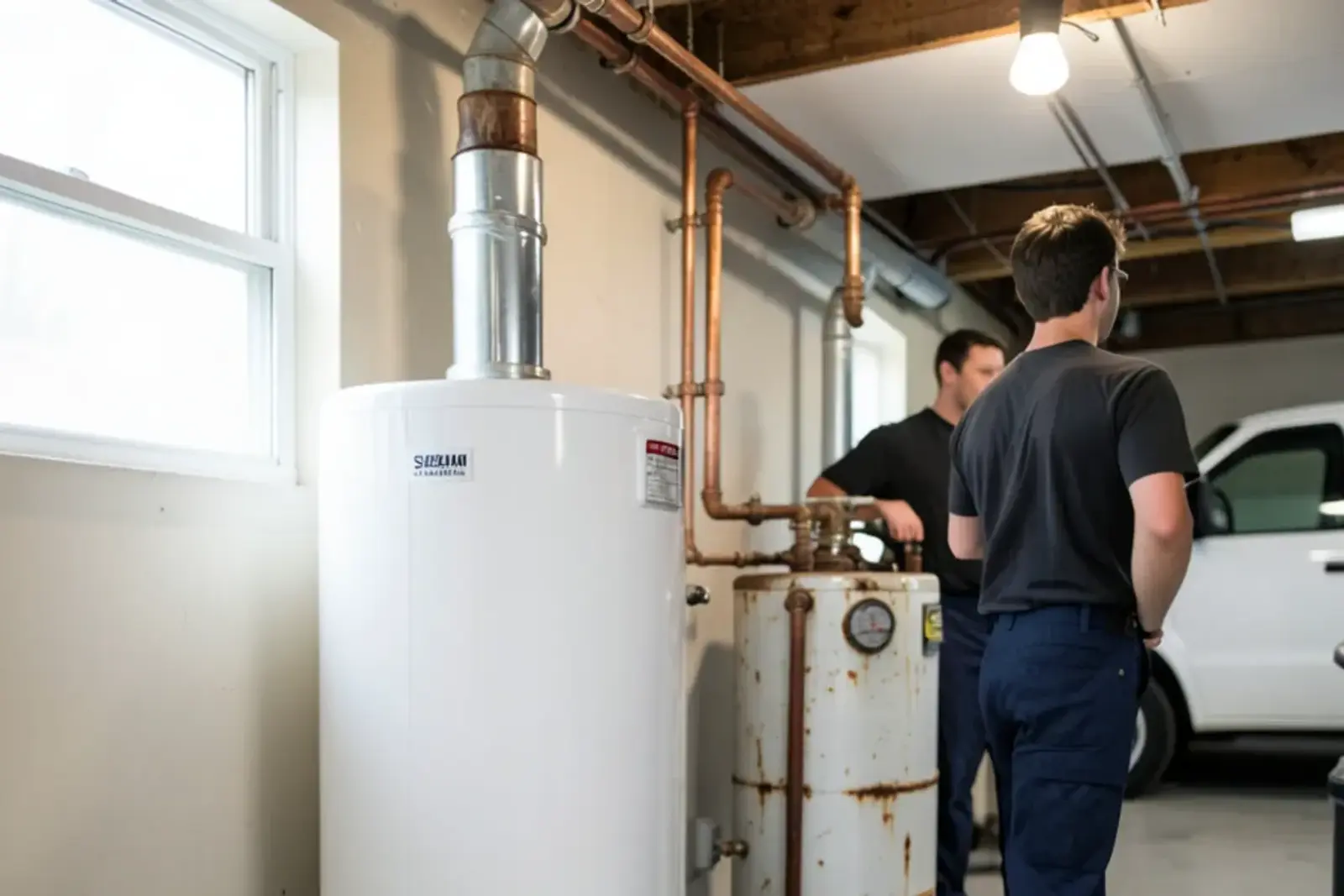
Newer tanks often carry more insulation than the ones they replace, so a model with the same gallons can be wider or taller. In a closet or under a low duct, that can mean a different model, reworked connections or moving the heater. None of that shows in a tank price.
Warranty years are a price tier
The same size tank is often sold with more than one warranty length, and the price follows the years. ENERGY STAR certified water heaters carry at least a six-year warranty. Compare quotes at the same warranty length, and get in writing who registers it.
Hard water and the drain-down
Fraser's water comes from the Great Lakes Water Authority's Lake Huron plants at about 105 mg/L of hardness, roughly 6 grains per gallon. That's moderately hard, enough to build sediment in a tank that's never been flushed. A drain valve clogged with scale turns a quick drain-down into a slow one, which is part of why quotes include time to empty the old heater.
Repair or replace when the quote comes in
A leaking tank shell can't be fixed, so that decision makes itself. For everything else, weigh the part against the tank's age and condition. A failed thermocouple, igniter or relief valve on a younger heater is usually worth repairing through our water heater repair visit. Repeated failures on an older tank with a depleted anode point the other way. If you're thinking of changing heater types at the same time, read our comparison of tank and tankless heaters for Michigan homes first.
Questions to put to any installer before you sign
Get these answers in writing, whoever you hire:
- Which permits will you pull, and is the inspection included?
- Is an expansion tank, gas pipe change or vent change part of this price?
- Does the quote cover removal and disposal of the old heater?
- What manufacturer warranty comes with this model, and what voids it?
- Who registers the warranty with the manufacturer?
When you're ready to talk through a water heater installation, call and we'll go over what your setup needs.
What to have ready when you call for a quote
A phone quote is only as good as what's on the rating plate. Before you call, write down the fuel, the gallons and the age from the label, whether the vent runs into a chimney or out the wall in plastic pipe, and whether there's an expansion tank on the cold line. Then decide the scope. Like for like keeps the quote simple. Changing to a heat pump or a tankless water heater installation changes the vent, gas or electrical lines, so settle that question before comparing prices.
Questions about water heater replacement cost
Can a water heater that's leaking from the tank be repaired instead of replaced?
Not when the tank itself is leaking. Once the steel tank corrodes through, there's no lasting repair. A drip from a fitting, the drain valve or the relief valve is different, and those parts can often be fixed or replaced. Check the fittings first before deciding. A manufacturer's manual notes that condensation from a cold tank is often mistaken for a leak, so let the tank heat for a couple of hours before you judge.
Do I need a permit to replace a water heater in Fraser?
Yes. Fraser's building department says permits are required for plumbing, mechanical and electrical work, and its fee schedule lists water heater lines under both plumbing and mechanical fees. A plumber pulling the permit is normal. Ask whoever installs your heater which permits they'll pull and whether the inspection is part of their scope. If you live outside Fraser, your own city's building department sets the rules and fees.
Why does a bigger water heater cost so much more to install?
Above 55 gallons the rules change. Federal efficiency standards that took effect April 16, 2015 effectively require condensing technology for gas tanks and heat pump technology for electric tanks over 55 gallons. Going from a 50 to a 75-gallon gas tank brings a new plastic vent, a condensate drain and sometimes a larger gas line, and each of those is its own line on the quote.
Is it cheaper to replace a water heater before it fails?
Usually, yes. A planned swap lets you choose the model and warranty, compare quotes and book a weekday. A failure tends to land on a night or weekend, when work across the trade costs more and you take whatever model is available. A planned job also skips the water cleanup. If the tank is past its warranty years and showing rust or noise, start pricing it.
Why does a tankless quote include gas line work when my tank never needed it?
A whole-house gas tankless heater can burn several times the gas of a standard tank at full fire. One manufacturer's residential power-vent tank manual covers 40 and 50 gallon models rated between 40,000 and 60,000 Btu per hour, while a large condensing tankless model is rated up to 199,900. The pipe from the meter has to carry that load at the right pressure, so the installer sizes it before quoting.
Fraser plumbing services for this problem
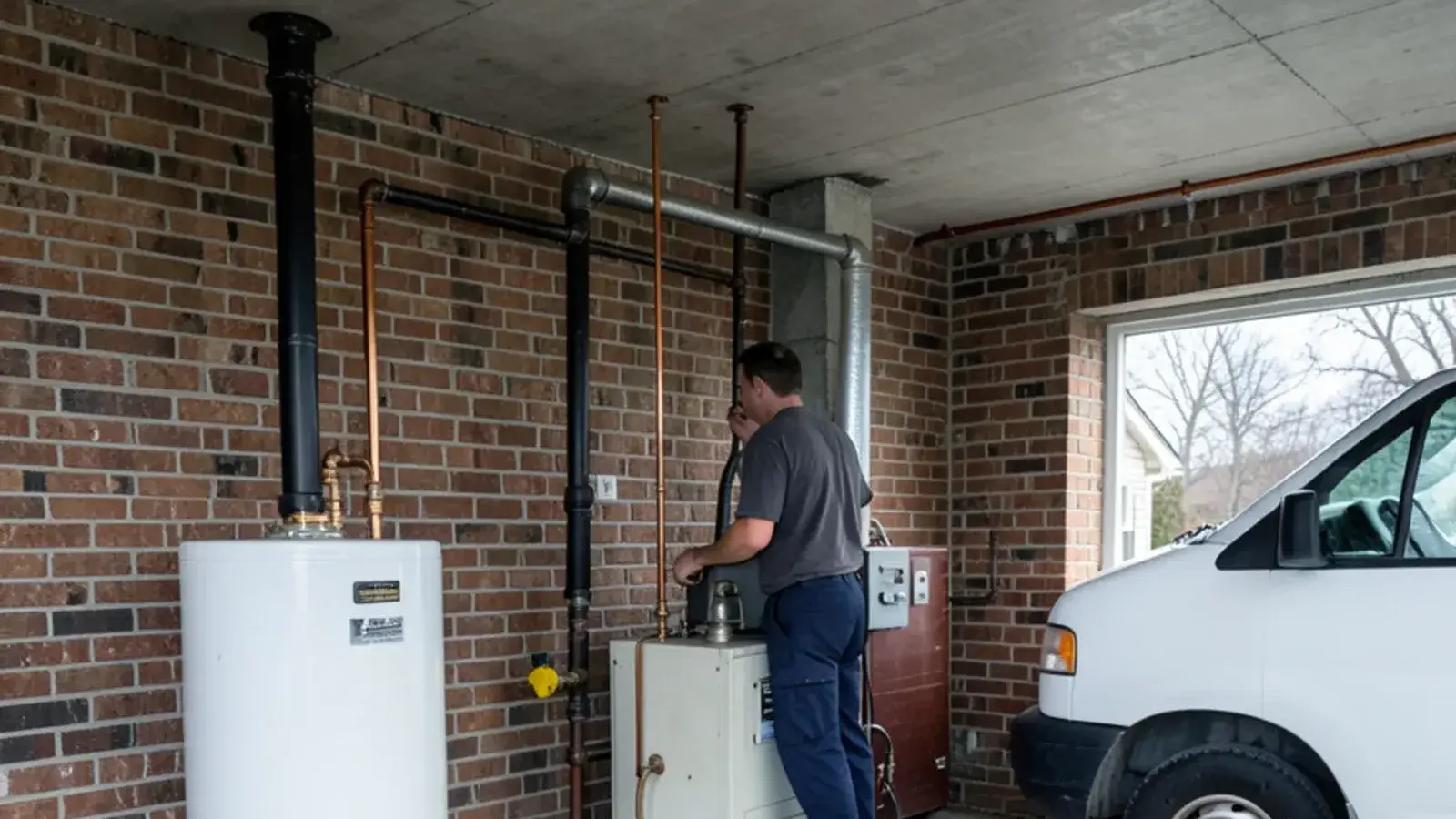
Water heater installation
New tank sized to your busiest hour, permitted with the city and set up for inspection
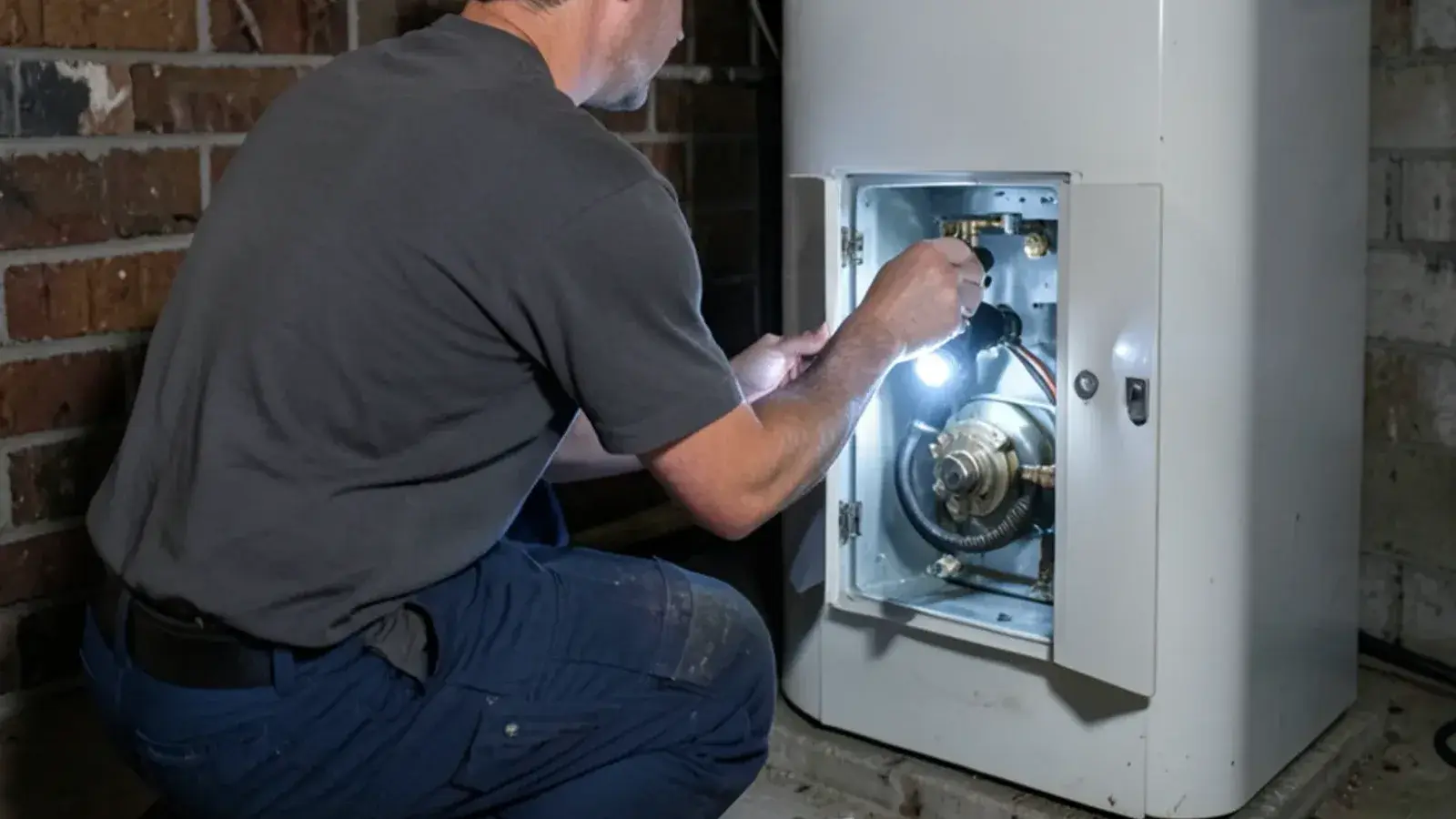
Water heater repair
Finds the failed part on gas or electric tanks and tells you plainly if the tank is done
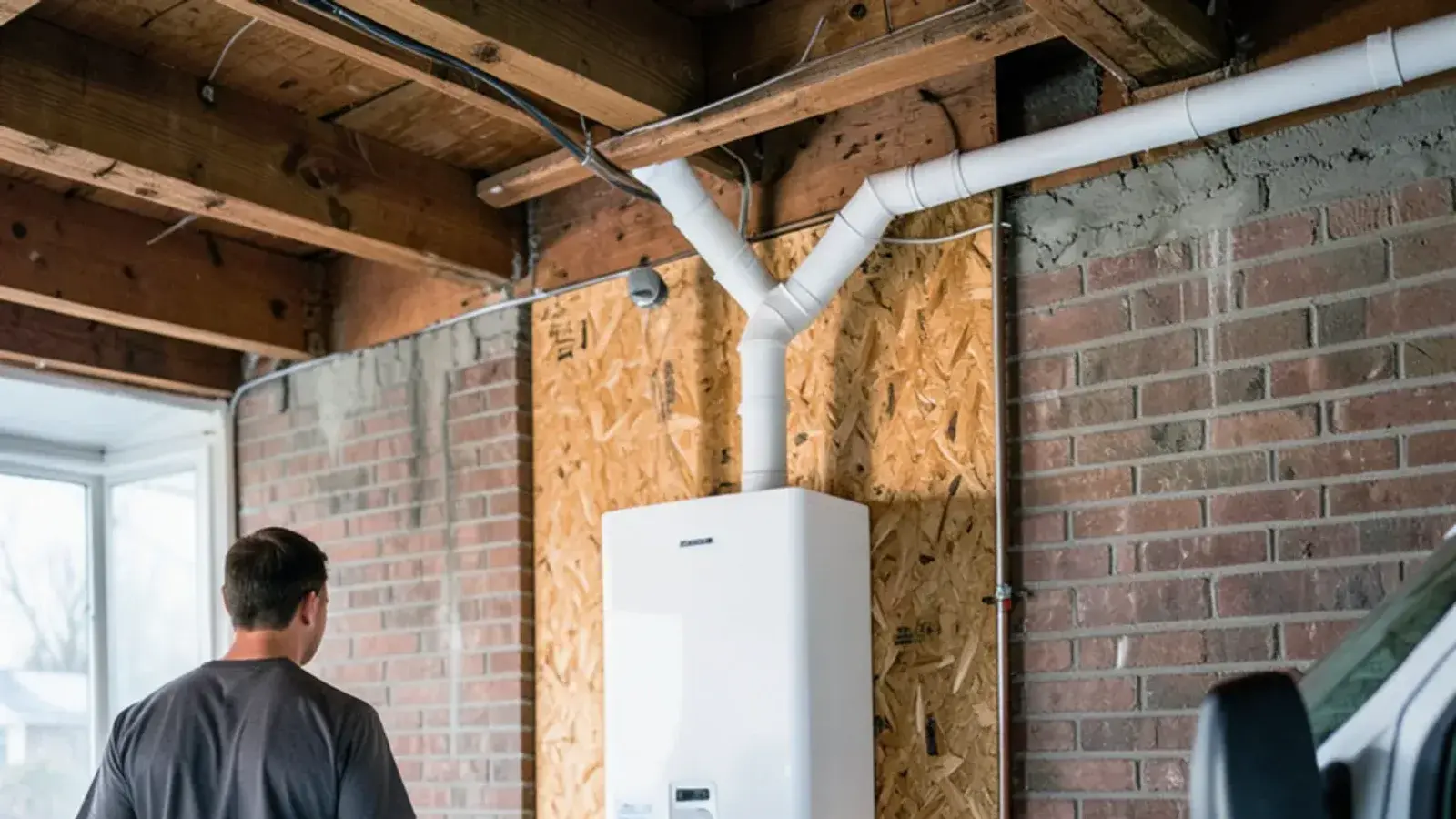
Tankless water heater installation
Gas line, vent and condensate planned up front so a tankless unit keeps up in winter