
By Plumber in Fraser, MI, Fraser, MI · Published · Last updated
The signs a water heater is going bad tend to arrive in a pattern: a damp spot, then a new noise, then hot water that runs out sooner or looks wrong. Catch them early and you get to choose between a repair and a planned replacement, instead of mopping a basement in Fraser at 6 a.m. Some symptoms are harmless, though. Here's how to sort them.
Water around the base: leak or condensation?
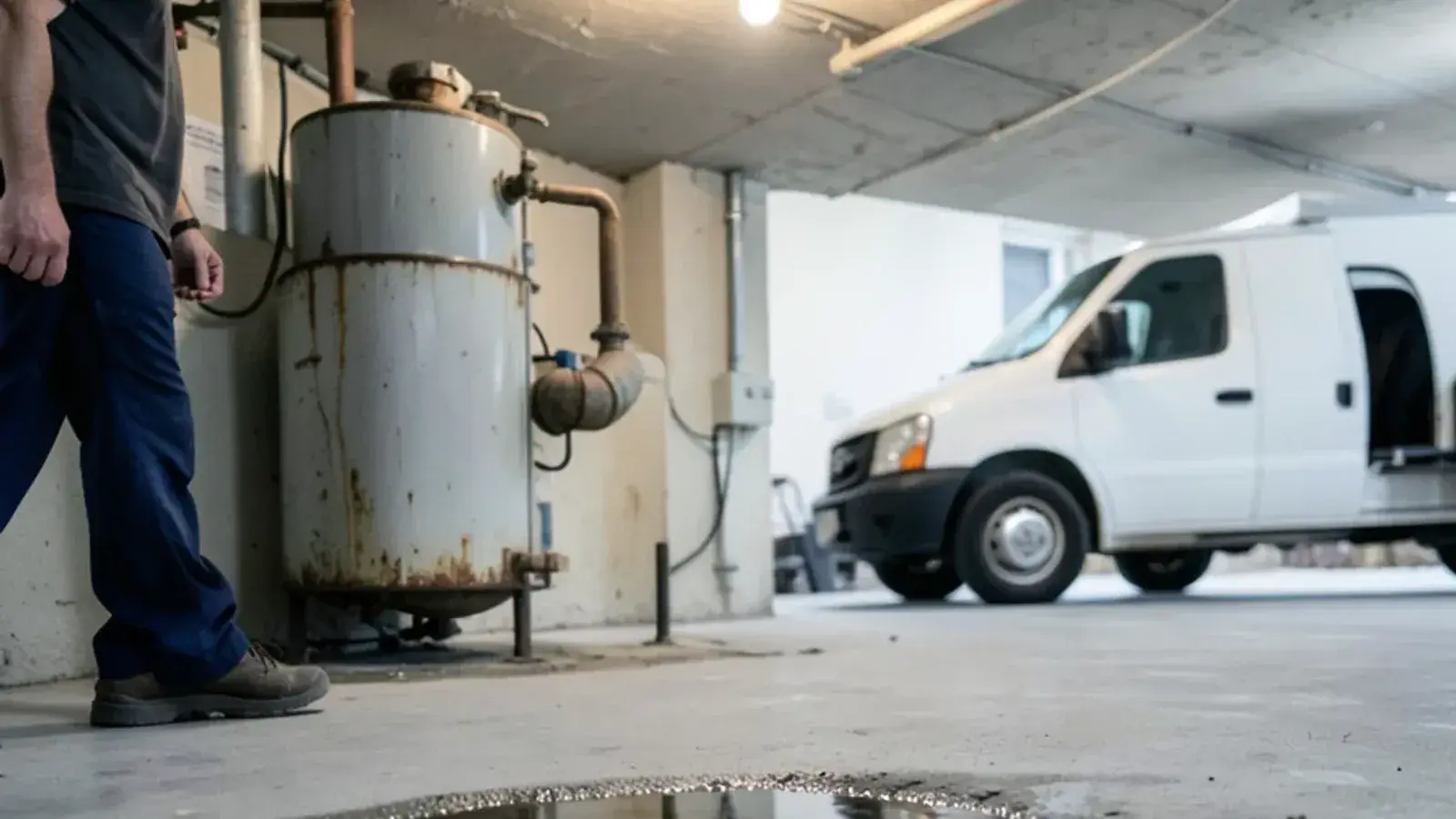
A wet floor under the tank is the sign people worry about most, and it's often not a leak. The manual for a common A. O. Smith residential gas model warns that condensation from combustion can drip onto the burner and the floor when the tank is full of cold water. It's worst in winter and early spring, when incoming water is at its coldest, and right after heavy hot water use. Before you assume the worst, work through it in order.
Step 1: let the tank heat up
The manual says to give the water time to warm up, about one to two hours. If the dripping stops once the tank is hot, it was condensation.
Step 2: check the fittings with a cotton swab
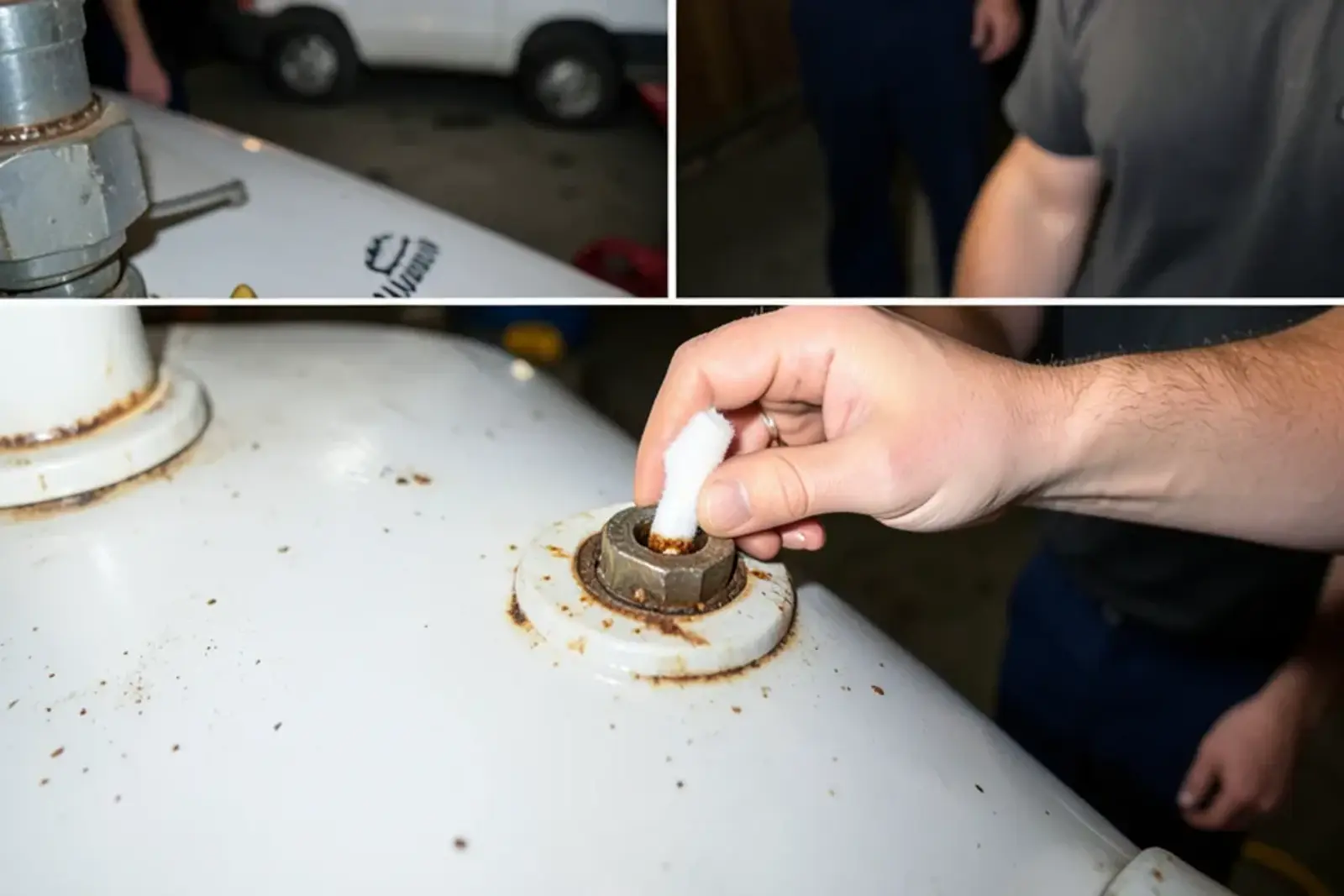
Push a cotton swab into the gap where each pipe nipple enters the top of the jacket. A wet swab means a fitting is weeping, which is usually repairable. Check the drain valve near the bottom too.
Step 3: rule out the relief valve and the rest of the room
Look at the end of the relief valve discharge pipe. Then check the water lines overhead, nearby appliances and the floor drain. A. O. Smith's guide points out that many suspected leakers turn out to be something else. If the water is dripping from above, a pinhole in a supply line or a weeping joint is a job for leak detection and repair, and the heater may be fine.
If the water is coming from the tank seam or from under the jacket and none of those checks explain it, the tank itself is likely failing. A corroded tank can't be patched.
When the relief valve drips
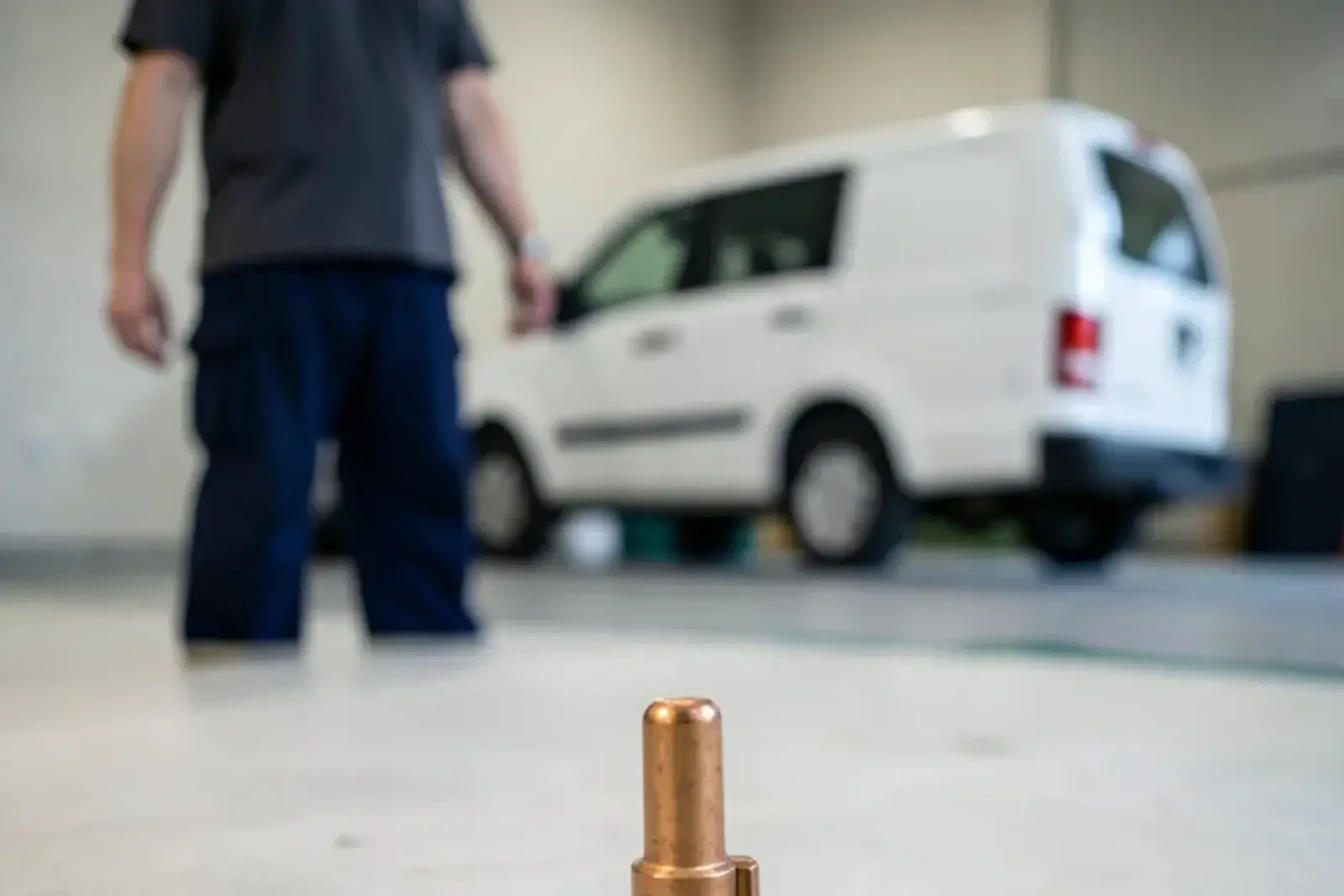
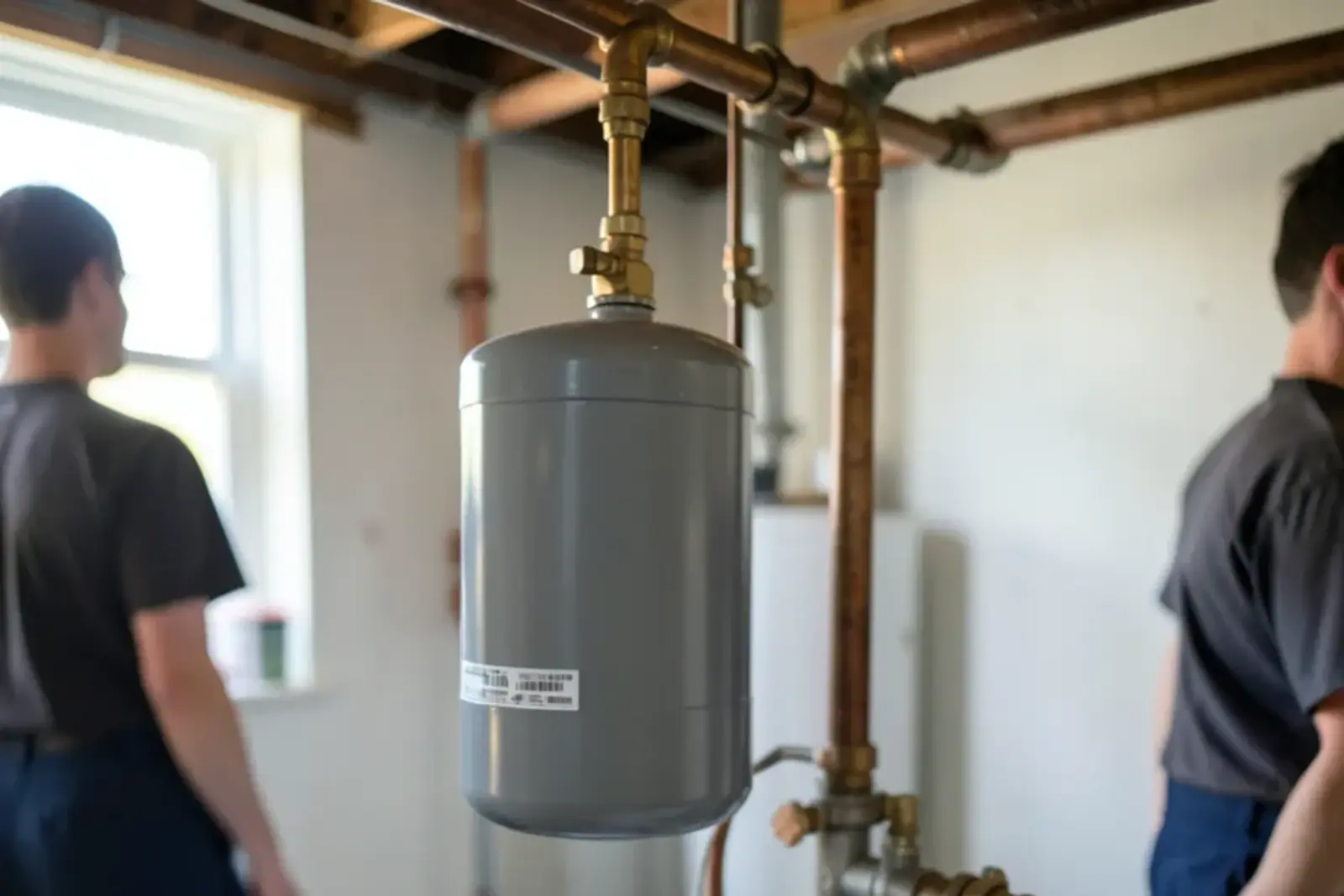
The temperature and pressure relief valve is a safety device. According to the International Code Council's CodeNotes on relief valves, any discharge at all points to a problem in the water system, the heater or the valve. A. O. Smith's manual names excessive water pressure, usually from thermal expansion in a closed system, as the most common cause. That's why the manual calls for an expansion tank on every closed system.
A system is closed when a check valve, backflow preventer or pressure reducing valve on the main keeps heated water from pushing back toward the street, so pressure climbs every time the burner runs. The 2015 Michigan Residential Code requires a pressure-control device there (P2903.4), usually a small expansion tank on the cold line. The manual adds that tank leaks caused by thermal expansion aren't covered under its limited warranty.
Test the valve once a year by lifting its lever a few times with nobody near the discharge pipe, because the water will be scalding. It should snap shut and stop. If it keeps running after you let go, close the cold water inlet to the heater and call for service. Never cap or plug the discharge pipe.
Sounds, smells and the color of the hot water
Each of these has a short list of usual causes.
| What you notice | Usual cause | What to do |
|---|---|---|
| Popping or rumbling while the burner runs | Sediment layer on the tank bottom | Drain and flush the tank; sediment can clog the drain valve |
| Light sizzle on a cold tank | Condensation hitting the burner | Normal; watch whether it fades as the tank heats |
| Rotten egg smell, hot side only | Anode rod reacting with the water | Ask about a different anode and a tank treatment |
| Rusty or brown hot water, cold side clear | Corrosion inside the tank or a depleted anode | Inspect the anode soon; plan for replacement if the tank is rusting |
| Hot water runs out sooner than it used to | Sediment taking up space, or a failing burner or element | Flush first, then have the controls tested |
| Pilot won't stay lit | Thermocouple, flame sensor or a combustion air problem | Have it diagnosed; don't keep relighting it |
| Sputtering or a rush of air at a hot tap after two weeks or more away | Hydrogen gas collected in an unused tank | Run the farthest hot faucet for several minutes first, with no flame or cigarette nearby |

To check where rusty water comes from, fill one glass from the cold tap and one from the hot. If only the hot glass is tinted, the water heater is the source. If both are, the problem is upstream in the piping or the service line.
The anode rod tells you how much life is left
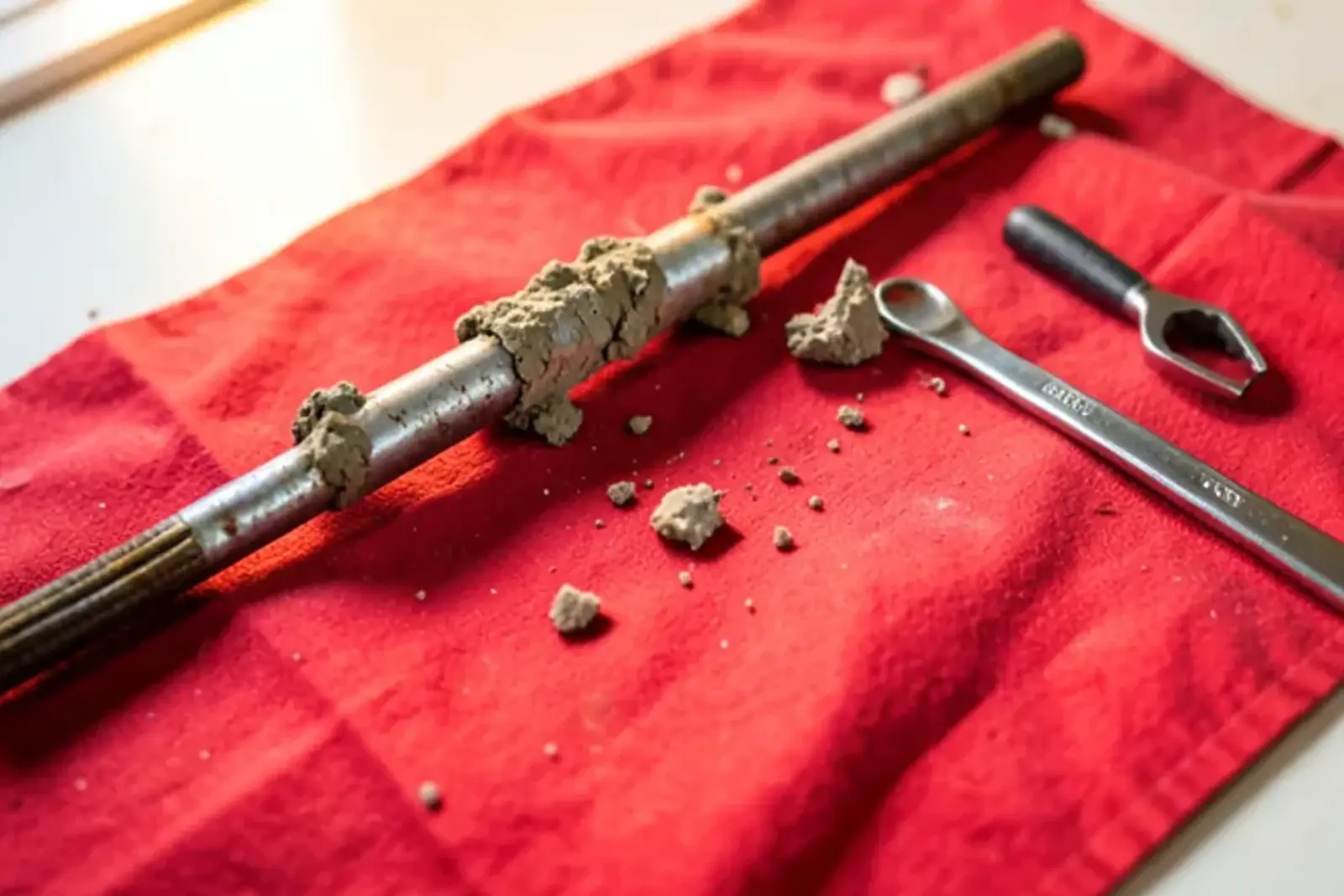
Every steel tank has a sacrificial anode rod that corrodes so the tank doesn't. A. O. Smith's installation and operating manual says to inspect it after the first six months, then every year, and more often if you have a softener, which depletes it faster. Once the anode is used up, the tank starts to corrode and eventually leaks. Anode rods are consumable parts and aren't covered by the tank warranty.
A rod worn down to bare wire on an older tank is a strong hint to start planning. A healthy rod with a minor valve problem says repair. For what goes into that decision, see our guide to what drives the cost of replacing a water heater.
Signs that call for shutting it off now
Some symptoms shouldn't wait for a convenient day:
- You smell gas near the heater. Leave the house, don't touch light switches or phones inside, and call your gas utility from outside or a neighbor's phone. In Fraser, gas service comes from Consumers Energy.
- Soot or scorch marks show up around the draft hood, vent pipe or burner door. That can mean flue gases aren't venting, and the manual tells you to call the gas utility before using the heater again.
- Water is running steadily from the tank and won't stop. Close the cold inlet valve, turn the gas control to off or shut the breaker, and keep people away from hot water.
The Consumer Product Safety Commission notes that 140°F water can cause a serious burn in about six seconds, so treat any unexpected hot discharge with care.
What we see in basements around Fraser
Fraser buys its water from the Great Lakes Water Authority's Lake Huron and Northeast plants. GLWA's 2025 mineral analysis put average hardness at about 105 milligrams per liter, roughly 6 grains per gallon. That's moderately hard, enough that a heater nobody has ever drained carries a real layer of sediment by its later years. That layer is the popping you hear.
Flushing has a trade-off. On an old tank that's never been drained, the manual warns sediment can clog the drain valve, and a valve that hasn't turned in years may drip once opened. On a newer tank it's cheap maintenance. On an older one, weigh it against the age and warranty years on the rating plate.
Incoming water is coldest in January and February, so burner condensation peaks just when people worry most about a leak. The manual adds that an undersized heater makes more condensation, worth knowing if a family has outgrown its tank.
A once-a-year check that catches most of these early
The A. O. Smith manual lists yearly checks, and most take no tools:
- Clear the area. Nothing stacked against the tank, and no solvents or paint cans near a gas burner.
- Check the vent and draft hood for soot, rust or a loose joint. Soot means stop using the heater until the cause is fixed.
- Test the relief valve with the lever, standing clear of the discharge pipe.
- Flush a pail from the drain valve. Sand, flakes or rust in the bucket show what's inside the tank.
- Hold a kitchen thermometer under the nearest hot tap. The CPSC recommends 120°F.
- Have the anode rod pulled and inspected, sooner if you run a softener. It often takes a breaker bar and headroom, so it's usually a service-call item.
Repair it, plan a new one, or call today?
Use what you found to sort the next step:
- Repair it when the fault is a weeping fitting, a dripping drain valve, a worn relief valve, a bad thermocouple or a dead element on a tank with clear hot water.
- Plan a replacement when you see rusty hot water from the tank, an anode worn to bare wire, rust at the bottom seam, or a tank past its warranty years. Planning gives you time to compare water heater installation options before the basement floods.
- Call now for water coming from the tank shell, a gas smell, soot at the draft hood, or a relief valve that runs and won't stop.
A replacement in Fraser needs a permit. The city's FY 2026-27 fee schedule lists a hot water heater on both its plumbing schedule ($40) and its mechanical schedule ($40), plus a $30 application fee, and the Building Department can tell you which apply to your swap. Ask whoever installs it who pulls the permit.
For anything short of an emergency, a water heater repair visit sorts out which part has failed. We take calls from Fraser and nearby communities, including Clinton Township, which draws from the same two GLWA plants, and we'll talk you through shutting the heater down safely over the phone.
Questions about signs water heater going bad
Is a popping or rumbling sound from my water heater dangerous?
Usually not dangerous by itself. In a gas tank, it's most often water trapped under sediment on the tank bottom, flashing to steam as the burner heats it. It does waste energy and stresses the tank. A light sizzle when the burner runs on a cold tank is normally condensation, which A. O. Smith's manual describes as normal. If the noise comes with leaks or no hot water, have it looked at.
Why does my hot water smell like rotten eggs?
A. O. Smith's manual explains that the smell comes from a reaction between the tank's anode rod and certain water conditions, involving sulfate, low dissolved oxygen and harmless bacteria in the tank. If only the hot water smells, the water heater is the likely source. A different anode material and a tank disinfection often help. Don't remove the anode entirely, since that leaves the tank unprotected and voids the tank warranty.
Can a water heater leaking from the bottom be repaired?
Sometimes. If the water comes from the drain valve, a fitting, the relief valve line or condensation dripping off the burner, those are repairable or harmless. If it comes from the tank seam or from under the jacket after everything else checks out dry, the steel tank has rusted through and can't be patched. Close the cold inlet, shut off the gas or breaker and plan a replacement.
What temperature should my water heater be set to?
The Consumer Product Safety Commission urges households to set water heaters at 120°F to prevent scalds. Its guidance notes that 150°F water can cause third-degree burns in about two seconds, and 140°F water in about six. Check the real temperature by holding a kitchen thermometer under a hot faucet first thing in the morning, then adjust the thermostat following the manufacturer's instructions.
Fraser plumbing services for this problem
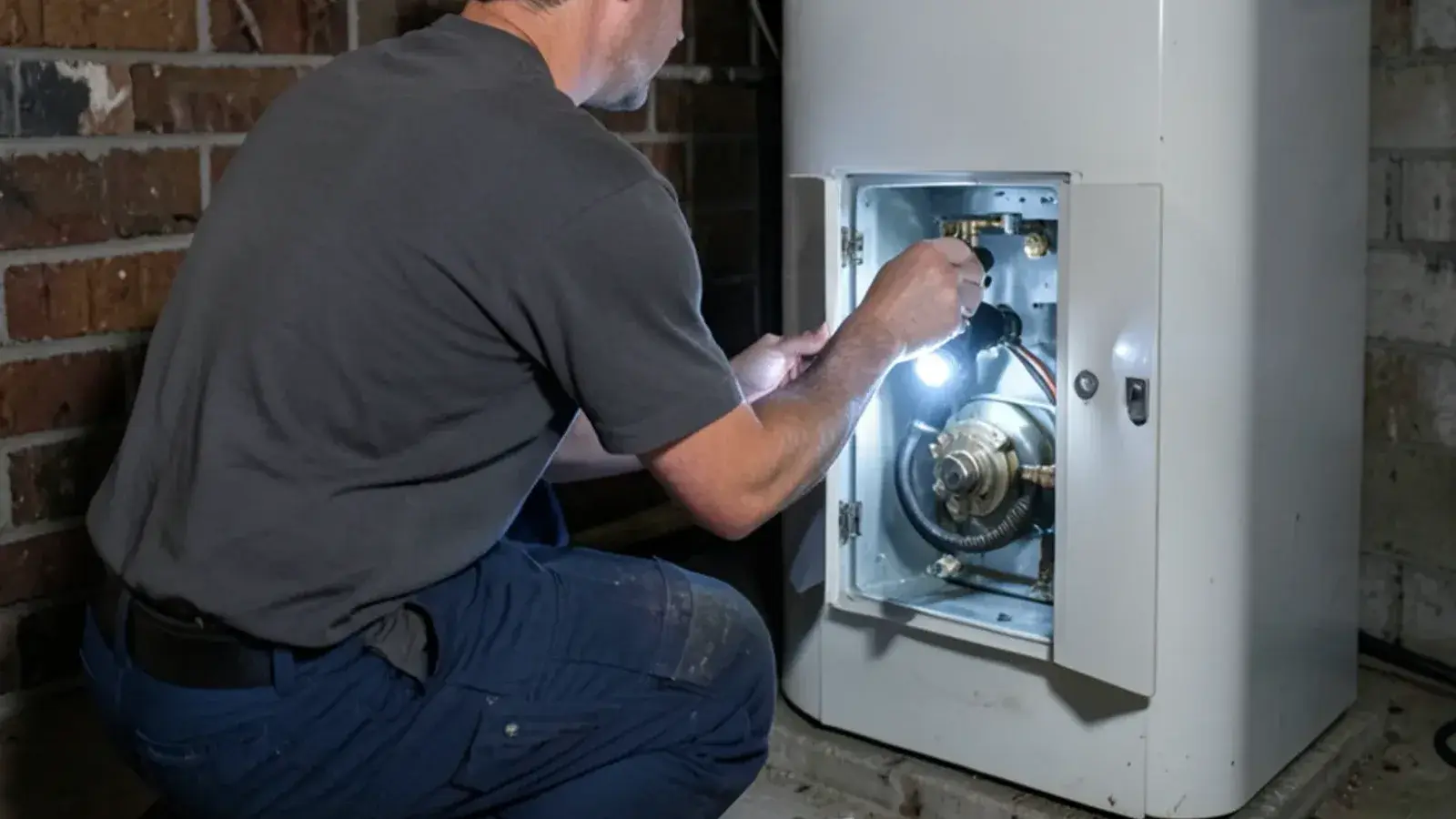
Water heater repair
Finds the failed part on gas or electric tanks and tells you plainly if the tank is done
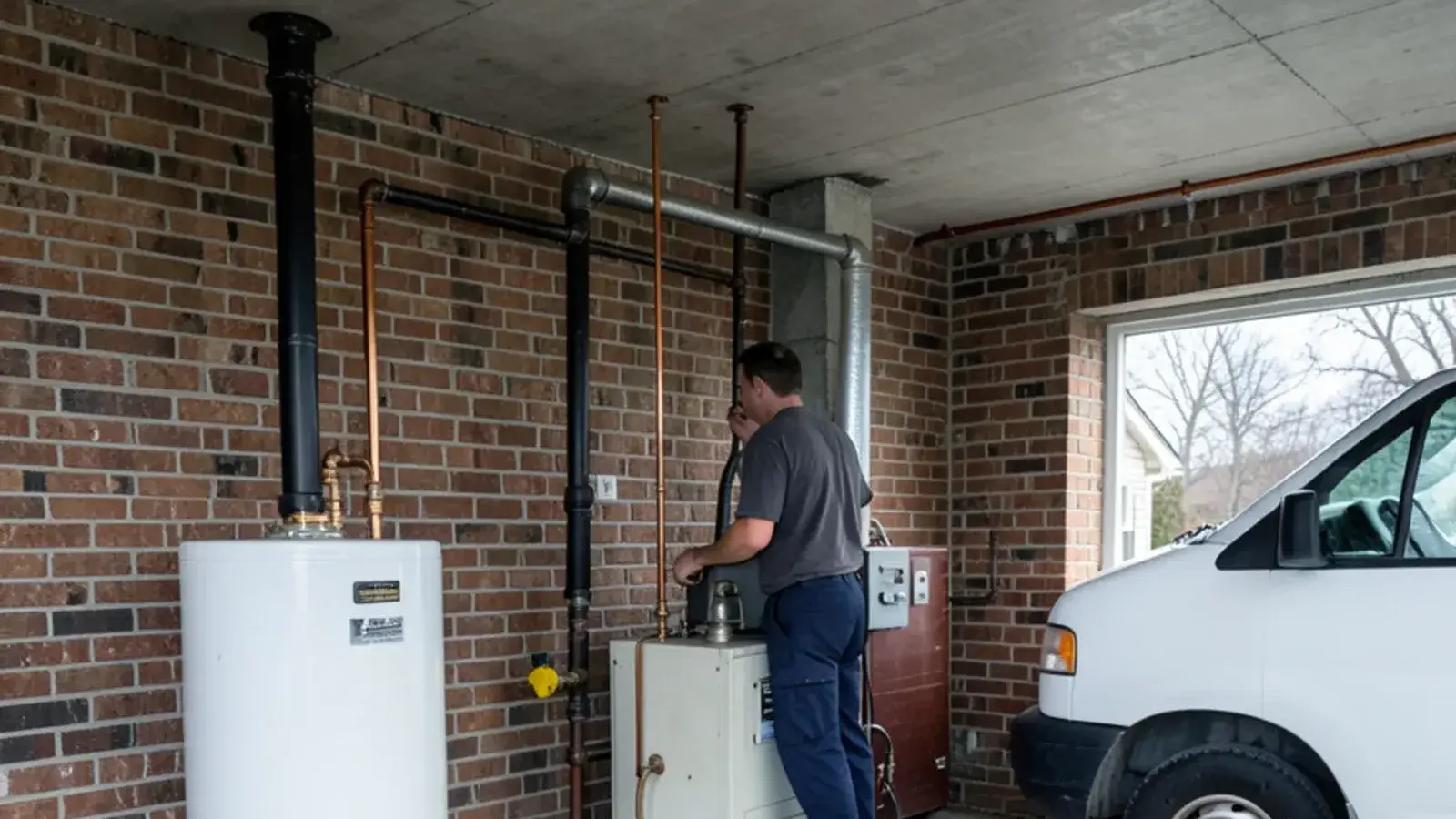
Water heater installation
New tank sized to your busiest hour, permitted with the city and set up for inspection
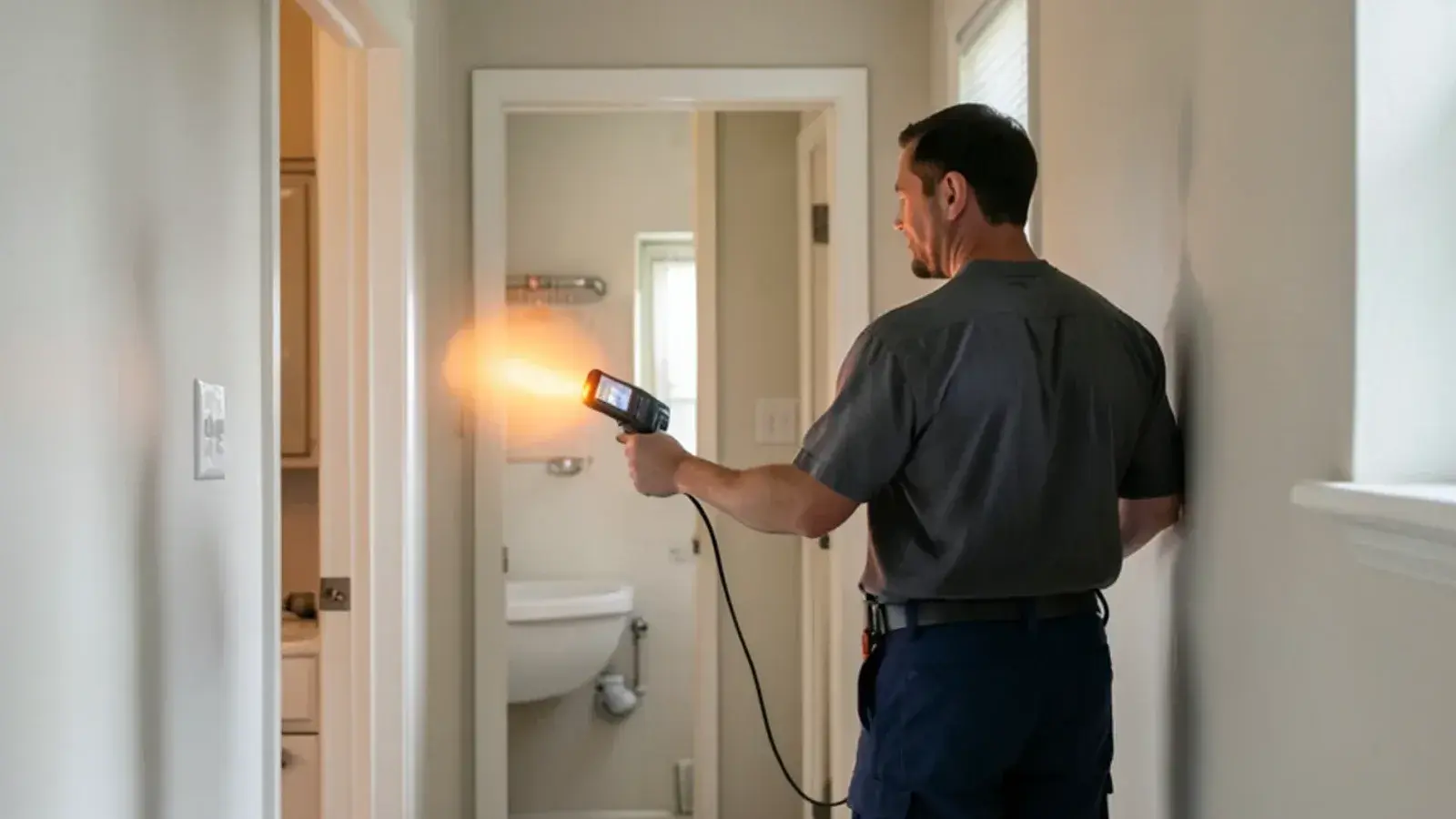
Leak detection and repair
Leaks traced at the meter and with moisture readings before any wall or ceiling gets opened