
By Plumber in Fraser, MI, Fraser, MI · Published · Last updated
Choosing between a tank vs tankless water heater in Fraser comes down to three local facts: how cold the water is when it reaches your basement, how much gas your meter and pipes can deliver, and how much scale our water leaves behind. Brochures tend to skip all three. This guide works through each one with published numbers, so you can see where a tankless unit shines and where a good storage tank still makes more sense.
How cold Great Lakes water changes a tankless heater's output
Fraser buys its water from the Great Lakes Water Authority, which draws from Lake Huron and the Detroit River. The City of Fraser's 2023 water quality report prints a tap water temperature range for GLWA's Northeast plant: 6.7°C at the low end, 23.2°C at the high end. That's roughly 44°F in winter and 74°F in summer.
A tankless heater has a fixed burner size, so the colder the water coming in, the fewer gallons per minute it can bring up to temperature. Set the heater at 120°F, the setting the Consumer Product Safety Commission recommends to prevent tap water scalds, and the rise you need is about 46°F in August and about 76°F in February.
Navien's NPE-2 installation manual publishes flow ratings at three temperature rises. Here's how they line up against ENERGY STAR's average fixture demands from its tankless gas water heater page.
| Temperature rise | NPE-180A2 flow | NPE-240A2 flow | What the NPE-240A2 could cover (ENERGY STAR averages) |
|---|---|---|---|
| 35°F | 8.4 GPM | 11.2 GPM | Four showers at 2.5 GPM each |
| 45°F (close to a Fraser summer) | 6.5 GPM | 8.7 GPM | Two showers plus a clothes washer at 3.3 GPM |
| 67°F | 4.3 GPM | 5.6 GPM | One shower plus a kitchen sink at 2.2 GPM |
| About 76°F (Fraser winter, our estimate) | About 3.8 GPM | About 4.9 GPM | One shower plus a dishwasher at 1.3 GPM |
The last row is straight arithmetic from the 67°F figures at the same heat output. It isn't a Navien rating. It shows the point, though. Two 2.5 GPM showers need 5.0 GPM, which is right at the edge of the larger unit on a February morning.
Gas supply is the first thing to check
A storage tank sips gas. A residential power-vent tank manual from A. O. Smith covers 40 and 50 gallon models rated at 40,000 to 60,000 Btu per hour. Navien lists the NPE-240A2 at 13,300 to 199,900 Btu per hour, with natural gas supply pressure required between 3.5 and 10.5 inches of water column.
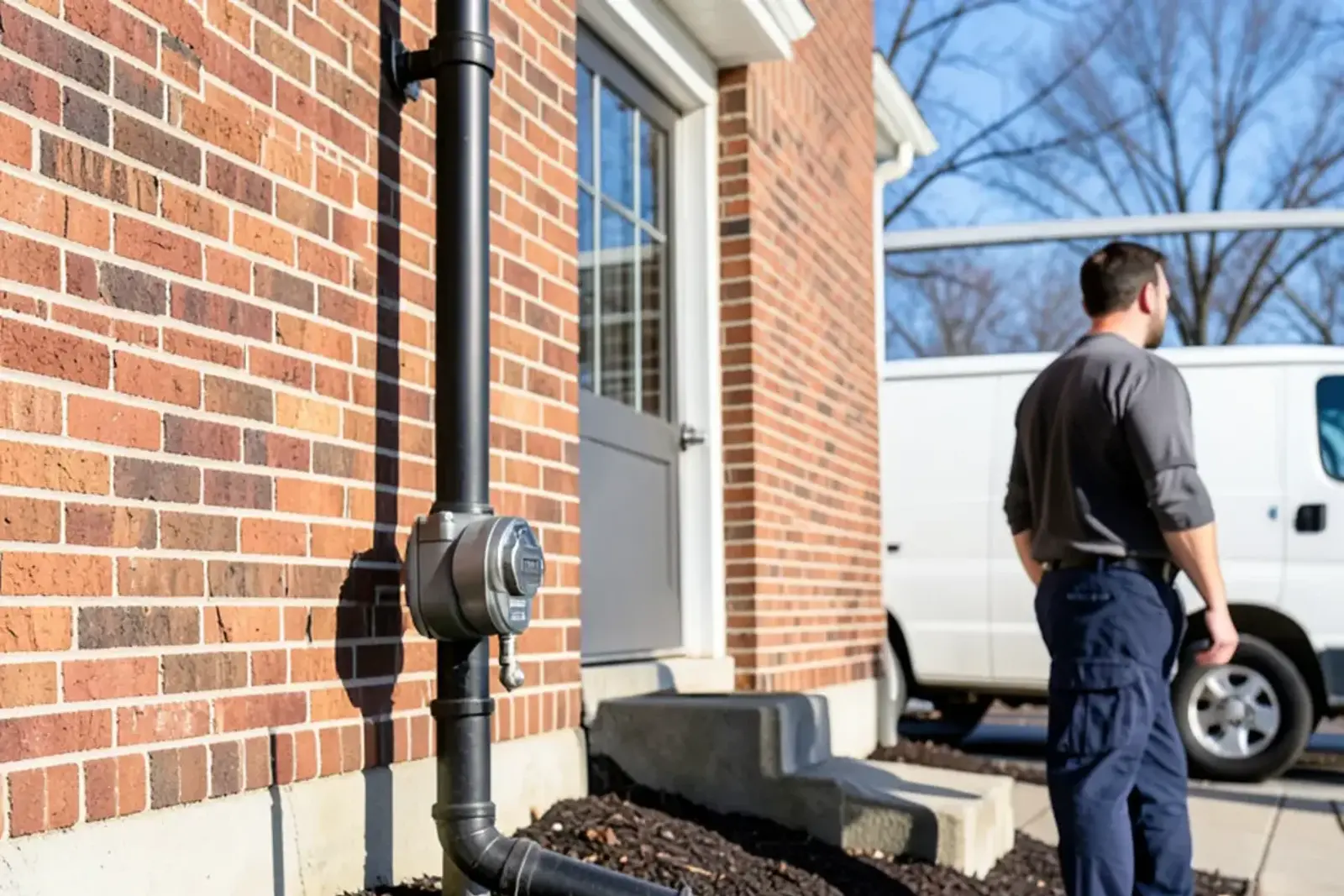
That jump is why ENERGY STAR tells buyers to have the installer confirm the existing natural gas line can keep up. Navien's FAQ says half-inch pipe can work if it's sized properly, and that pipe size, run length and pressure drop all matter. In practice, the installer adds up the furnace, dryer, range and new heater, measures the distance from the meter, and checks the National Fuel Gas Code tables. Sometimes the answer is a new, larger line from the meter. Sometimes the gas utility has to weigh in on the meter's capacity too.
Venting and where the heater can live
A standard atmospheric tank vents up a chimney or B-vent. Condensing tankless units vent sideways. Navien approves 2-inch vent pipe up to 75 feet with six elbows, or 3-inch pipe up to 150 feet with eight elbows, in PVC Schedule 40, CPVC, approved polypropylene or stainless steel. A condensing unit also needs a condensate drain and a 120-volt outlet.
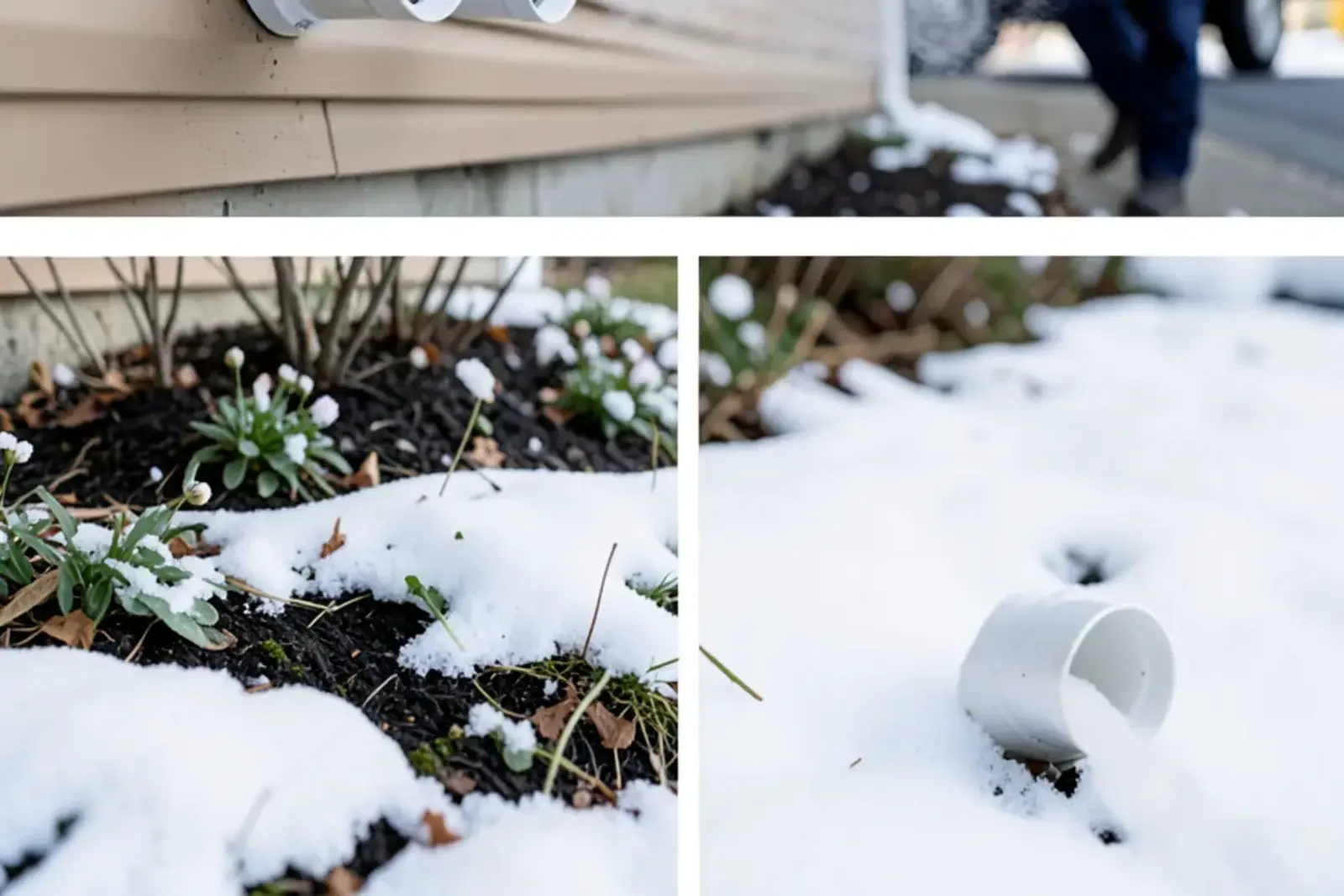
In Michigan, the termination spot matters in winter. Keep it clear of snow drift lines, decks and windows, and follow the manufacturer's clearance table. Navien also says outdoor mounting is recommended only in mild climates, so a Michigan install stays indoors.
Wall mounting frees floor space, which is a real plus in a crowded basement. Newer houses, such as many in Macomb Township, where the Census Bureau's median year built is 2000, often have an easier vent path to a side wall than an older home with a finished basement.
Scale, Fraser's water hardness and yearly flushing
The same 2023 Fraser report lists total hardness at the Lake Huron plant tap averaging 113 mg/L, with a range of 96 to 140. That's about 6.6 grains per gallon, which the USGS scale calls moderately hard.
Navien's manual sorts water into hardness bands. Fraser's average lands in the 4 to 7 grains per gallon band (61 to 120 mg/L). For that band, Navien recommends a softener or its own scale prevention system and says to flush once a year if no treatment device is installed. The flush uses white vinegar or a descaler made for tankless heaters. The manual's ceiling is 200 mg/L, and damage from poor water quality isn't covered by the warranty.
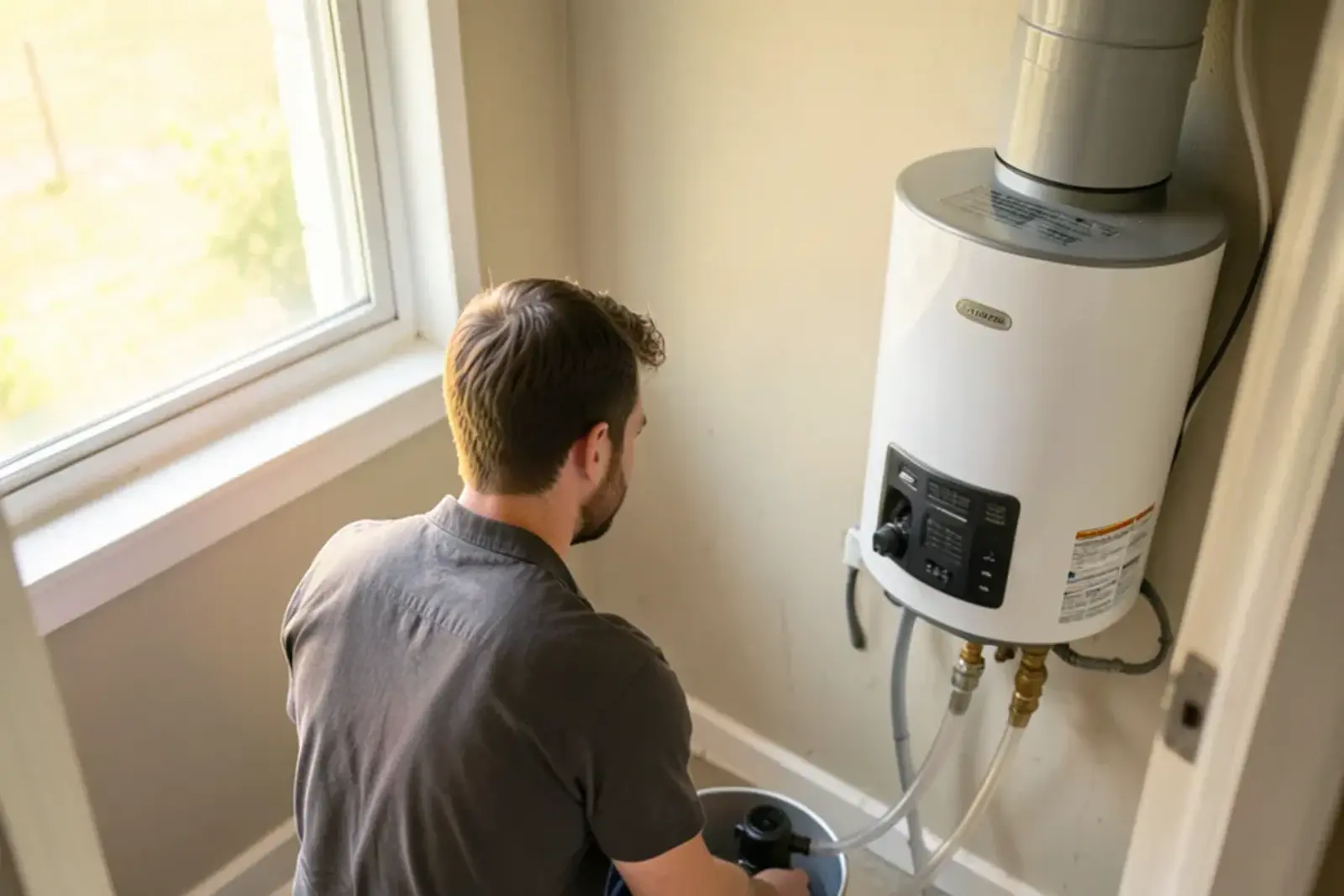
What a heat exchanger flush involves
Your heater's own manual has the exact steps and timing, but the outline looks like this:
- Turn off power and close the gas valve to the unit.
- Close the hot and cold isolation valves.
- Connect the pump and hoses to the service ports and open them.
- Circulate the descaling solution for the time the manual lists.
- Rinse with fresh water, close the ports and restore gas, water and power.
Tanks collect scale too. A. O. Smith recommends draining and flushing its tank every six months and checking the anode rod yearly.
What we see when Fraser homeowners weigh a tankless switch
The questions that settle it are usually practical ones the brochure never asks. These come up in Fraser's 1950s through 1970s ranches and split-levels again and again.
It doesn't shorten the walk to hot water
A tankless heater makes hot water endlessly, but it doesn't make it arrive faster. In a long ranch with the heater at one end of the basement, the far bathroom waits as long as it did with a tank, sometimes a few seconds longer while the burner fires. Every unit also has a minimum flow before it lights, listed in its manual, so a thin trickle at a bathroom sink may never get hot. Turn the hot tap off and back on quickly and you can get a short burst of cold between the two draws.
Power outages favor the old tank
A standard gas tank with a standing pilot keeps heating with the power out. A tankless unit, and any power-vent tank, stops with the electricity. If your block loses power in summer storms or ice, that's a real point for the tank.
The furnace left behind
Pull a tank out of a chimney it shares with an older furnace, and the furnace may end up venting alone in a flue that's now too big for it. That's a separate fix from the tankless install, and it belongs on the quote before work starts.
Gas is the long pole
Fraser's gas comes from Consumers Energy, and a large tankless burner can outrun both the house piping and, occasionally, the meter. The house side is a gas line repair and installation job with a city pressure test. The meter side is the utility's call, and it can add time to the project.
Which one fits your household
| Question | Storage tank | Condensing tankless |
|---|---|---|
| Gas demand | Low, usually fits the existing pipe | High, often needs a larger line |
| Venting | Chimney, B-vent or power-vent PVC | PVC or approved material to a side wall |
| Winter output | Stored volume plus recovery | Limited by burner size and inlet temperature |
| Floor space | Takes a footprint | Wall mounted |
| Scale care | Flush tank, inspect anode | Flush heat exchanger yearly without treatment |
| Electricity | Power-vent models need an outlet | Needs a 120-volt outlet to run |
If your household rarely runs two showers at once and your gas line is long and small, a tank is often the practical answer through our water heater installation service. If you want endless showers and wall space, and your gas supply checks out, look at tankless water heater installation. Either way, ask for the sizing math in writing.
Three numbers to get before you decide
Before you compare a tank quote to a tankless quote, get three numbers from whoever measures the house. First, the flow your household actually uses at once, worked out for February water, not August. Second, the total gas load of every appliance against what your pipe can carry from the meter. Third, the length and elbow count of the vent route to an outside wall. If all three fit, tankless is a fair choice. If one doesn't, a tank is likely the better buy for this house.
Questions about tank vs tankless water heater
Will a tankless water heater ever run out of hot water?
It won't run out the way a tank does, because it heats water as it flows. What it can do is fall behind. When too many fixtures run at once, or the incoming water is very cold, the heater can't raise all of that water to your set temperature, and the shower turns lukewarm. Sizing for winter inlet temperatures, not summer ones, is how you avoid that.
Can a tankless heater run on my existing half-inch gas line?
Sometimes. Navien says half-inch pipe can work for its condensing units if it's sized appropriately, and it points to pipe size, length and pressure drop as the factors, checked against the National Fuel Gas Code sizing tables. A long half-inch run that also feeds a furnace and a dryer often won't make it. The installer measures the run and adds up every appliance's load before deciding.
Does a tankless water heater work during a power outage?
No. A tankless unit needs its 120-volt outlet to run the controls, fan and ignition, so it stops when the power does. A standard gas tank with a standing pilot keeps heating without electricity, while power-vent and electronic-ignition tanks don't. If your street loses power in storms, ask about a backup power plan for the heater or weigh that in the tank-versus-tankless choice.
Do I need a permit to switch to tankless in Fraser?
Yes. Fraser's 2026-27 fee schedule lists a water heater on both the plumbing and mechanical sides, at $40 each, plus a $30 application fee. A tankless conversion usually adds new gas pipe, and the city bills gas piping up to five openings at $40 with a $40 pressure test per meter. Applications are filed online and inspections run Tuesday and Thursday mornings.
Do I need a water softener before installing tankless in Fraser?
Not necessarily. Fraser's water measured about 113 mg/L of hardness in 2023, which falls in the 4 to 7 grains per gallon band in Navien's manual. For that band the manual recommends a softener or a scale prevention device, and says to flush the heat exchanger once a year if no treatment device is installed. A yearly flush is the minimum either way.
Fraser plumbing services for this problem
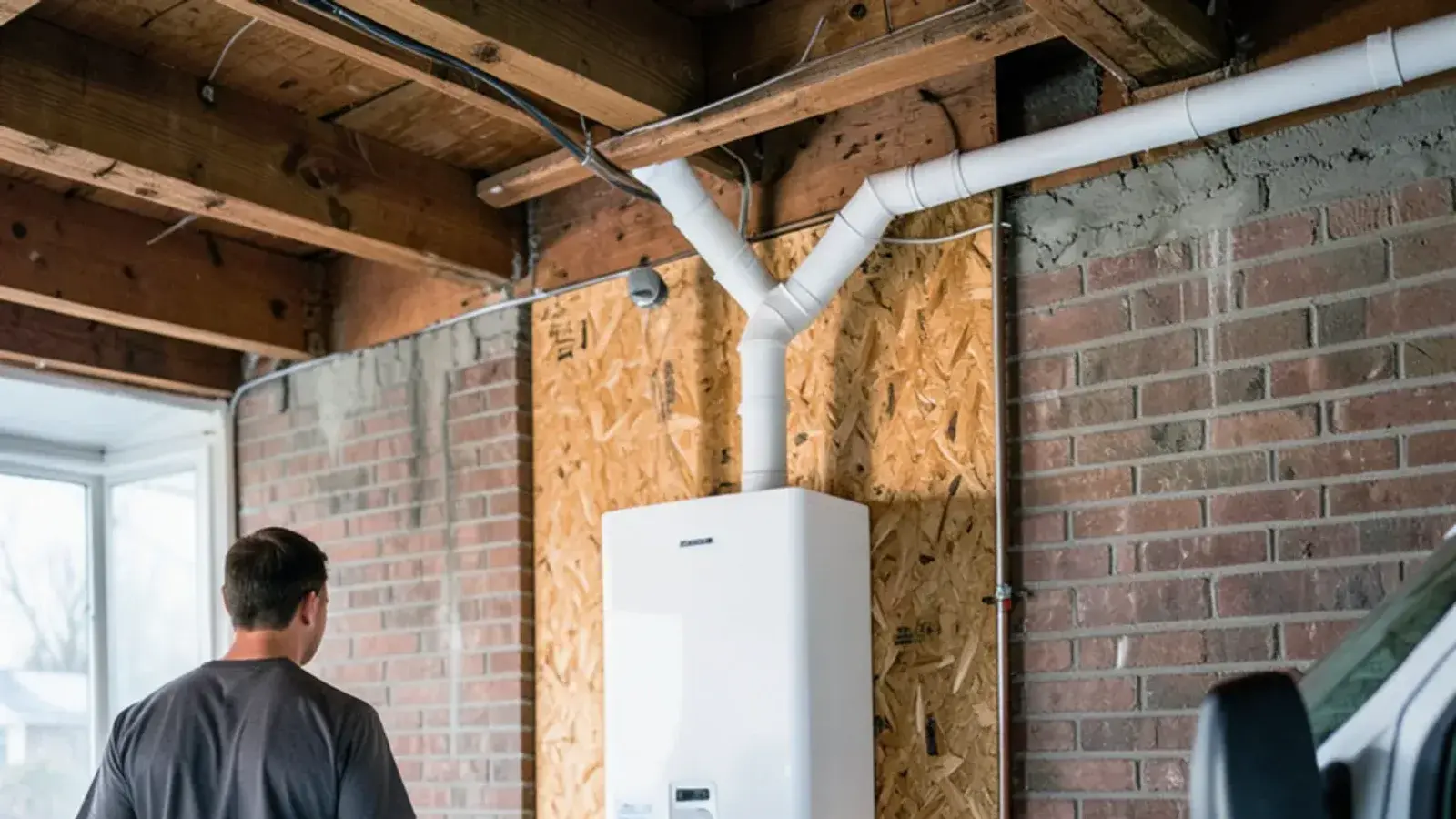
Tankless water heater installation
Gas line, vent and condensate planned up front so a tankless unit keeps up in winter
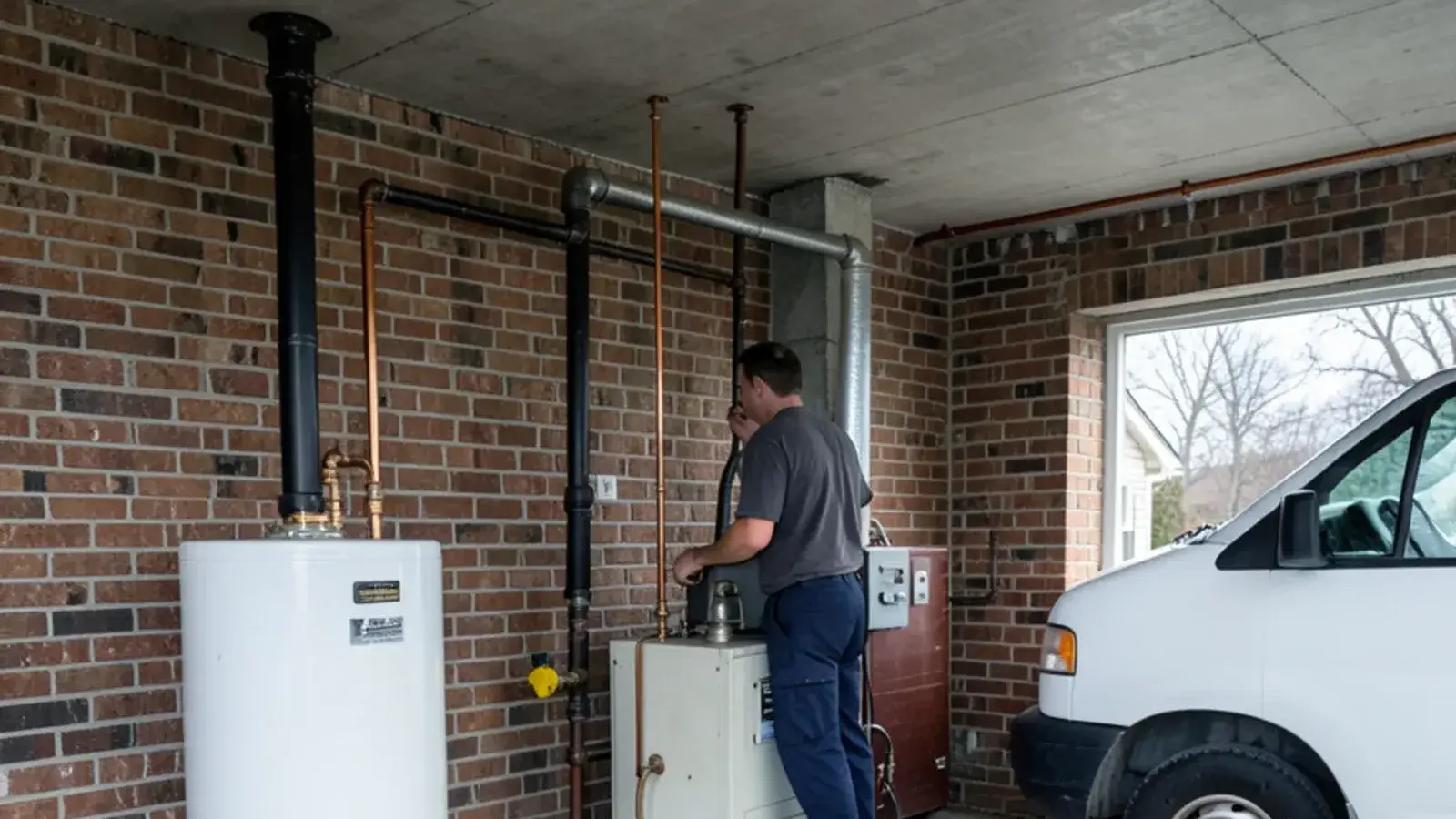
Water heater installation
New tank sized to your busiest hour, permitted with the city and set up for inspection
Gas line repair and installation
New gas runs and leak repairs, permitted as mechanical work and pressure tested before use