
By Plumber in Fraser, MI, Fraser, MI · Published · Last updated
A garbage disposal is a small motor with a spinning plate and a grind ring. It turns soft food scraps into a slurry that rides your kitchen drain to the sewer. It isn't a trash can. Most disposal jams and slow kitchen sinks in Macomb County trace back to the same few foods, and to the way they behave once they leave the disposal and slow down in the pipe.
The things to keep out of the sink
Start with the list, then the reasons. These are the items that cause the most trouble.
- Grease, cooking oil, butter, bacon fat and meat drippings
- Fibrous vegetables: celery, onion skins, corn husks, asparagus ends, artichoke leaves
- Starchy food: potato peels, pasta, rice, oatmeal, bread dough
- Coffee grounds in any real quantity
- Eggshells
- Bones, fruit pits and shellfish shells
- Anything that isn't food: wipes, paper towels, twist ties, rubber bands, cigarette butts, produce stickers
If the disposal is already humming, jamming or pushing water into the other sink bowl, skip ahead to the troubleshooting section and stop running it until you've had a look.
Why grease is the worst of them
Hot grease pours like water, which is why it seems safe. It cools in the trap and the pipe in the wall, sticks to the sides, and catches every bit of food that comes after it. Running the disposal with hot water only pushes the problem a few feet further down the line.
The Great Lakes Water Authority, the regional water and sewer authority for southeast Michigan, publishes a fats, oil and grease guide for households that says plainly not to pour grease down drains or garbage disposals. The same guide notes that in 2018, workers in Macomb County removed a 19-ton, 100-foot fatberg, a mass of grease mixed with wipes, from the sewer system. GLWA also points out that when a sewer backs up on private property, cleanup is the homeowner's responsibility.
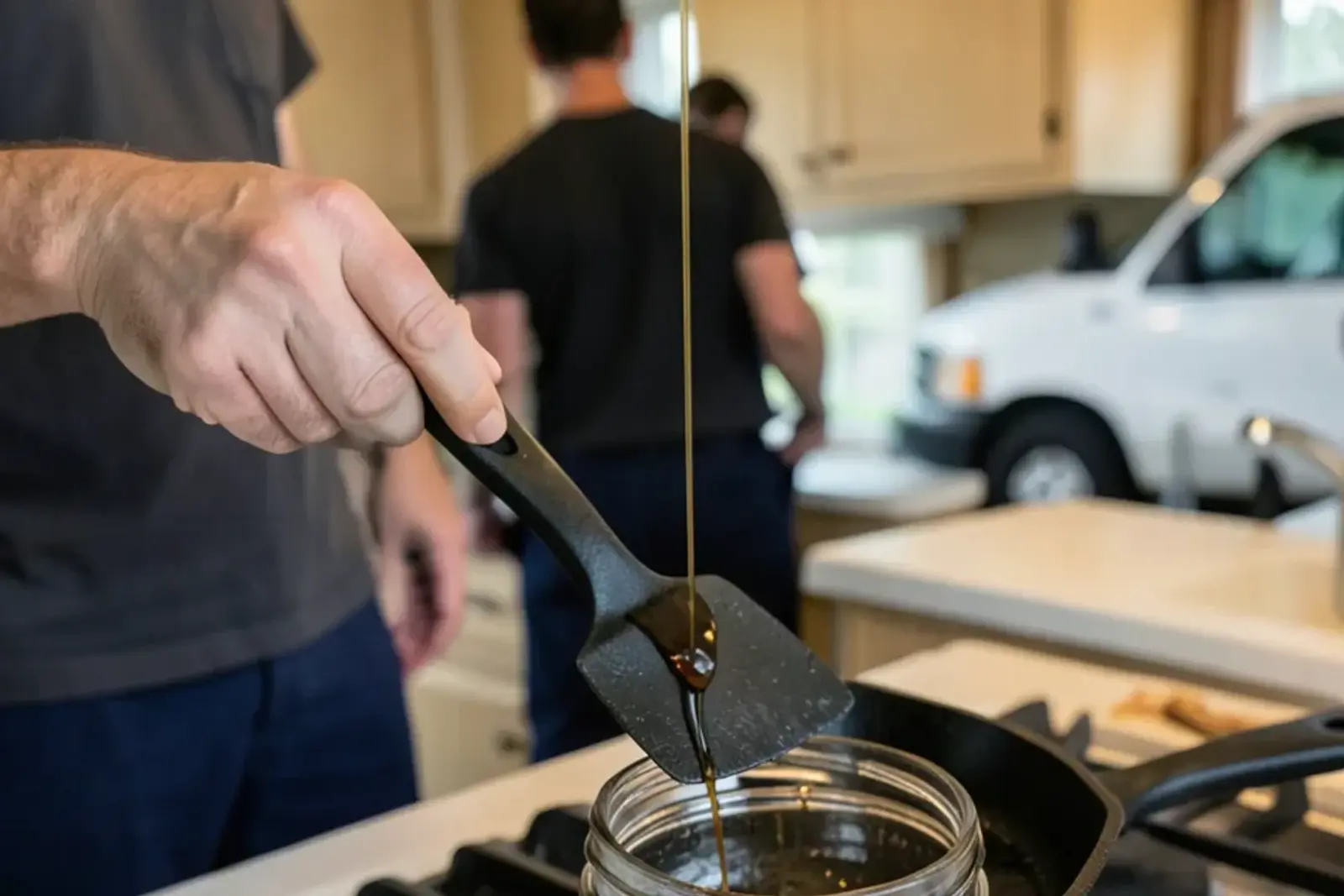
GLWA's steps for grease are simple:
- Pour or scrape greasy food waste into an empty can or jar.
- Let it cool or freeze in the container, then put it in the trash.
- Wipe pans, plates and utensils with a paper towel before washing them.
- Mix liquid cooking oil with an absorbent like cat litter or used coffee grounds in a sealed container before throwing it out.
Sauces, salad dressing, gravy and dairy count as grease too. A plate of leftover alfredo is mostly fat.
Foods that look harmless but clog the trap
Grease builds slowly. These foods can cause a blockage in one evening, usually right after a holiday meal when the disposal gets a week's worth of scraps at once.
| Food | What happens inside the disposal and drain | Where it goes instead |
|---|---|---|
| Celery, onion skins, corn husks, asparagus | Long strings wrap around the spinning plate and knot together in the trap | Trash or compost |
| Potato peels | Thin peels slip past the lugs and turn to a starchy paste that coats the pipe | Trash or compost |
| Pasta, rice, oatmeal, bread | Keep absorbing water after grinding and swell into a dense plug | Trash |
| Coffee grounds | Don't dissolve, settle in low spots and bind with grease into sludge | Trash or compost |
| Eggshells | Grind into grit, and the membrane can wrap the impeller | Trash or compost |
| Bones, pits, shells | Too hard to grind and can jam the plate or stall the motor | Trash |
| Fruit stickers, twist ties, wipes | Don't break down at all and snag other debris | Trash |
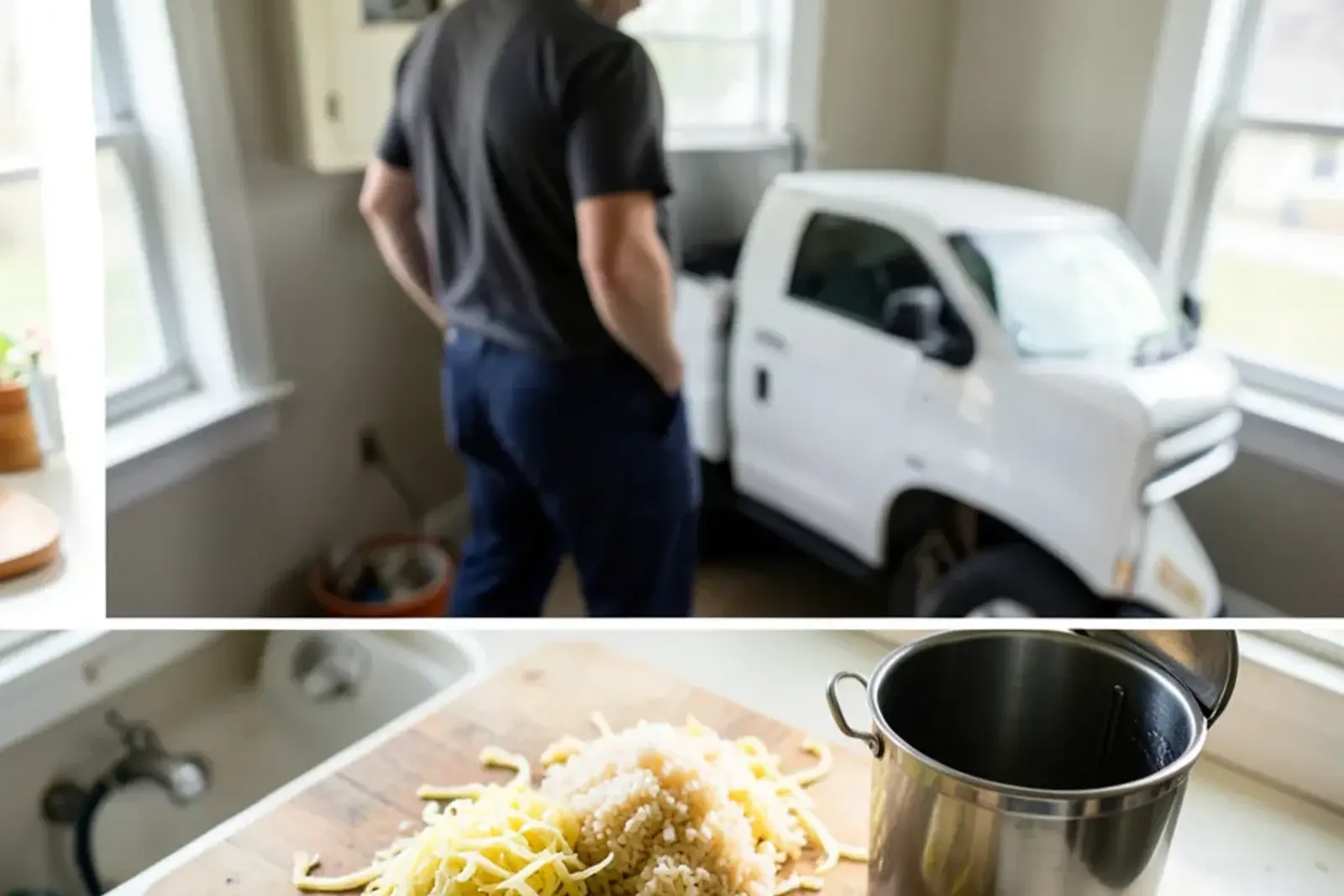
Small amounts of soft food are what a disposal is built for: plate scrapings, bits of cooked vegetables, soft fruit. The trouble starts with volume and with the foods in the table.
How to run a disposal so it lasts
A few habits make a noticeable difference in how often a kitchen drain clogs.
Run cold water first
Turn on a steady stream of cold water before you switch the unit on. Cold water keeps any fat solid so it grinds and moves along instead of coating the pipe.
Feed it slowly
Add scraps a handful at a time while it runs. Stuffing the chamber full and then flipping the switch is how jams happen.
Keep the water running after
Let the water run for 15 to 30 seconds after the grinding sound changes. That flushes the slurry past the trap and into the larger drain line.
Use it regularly
A disposal that sits for weeks can rust or seize. Running it every few days with a little water keeps the plate free.
What we see in kitchen drains in older Fraser houses
Most Fraser homes were built between 1950 and 1979, and plenty still have their original kitchen drain inside the wall. In those houses the disposal is often a later addition bolted onto plumbing that was sized and pitched for a sink alone. That's why a clog that starts as a few potato peels can end up being a drain problem rather than a disposal problem.
Older steel drain pipe roughens and narrows on the inside as it ages, and that rough surface is where grease and starch grab first. A long, nearly flat run from a kitchen on an outside wall to the main stack in a ranch gives slurry plenty of room to settle. A more powerful disposal grinds finer, but it doesn't change the pipe it empties into. When the same sink clogs every few months, the honest choice is between regular cleaning of that line and replacing the section between the trap and the stack. The first costs less each time; the second ends the cycle. A camera look tells you which pipe you have before you decide.
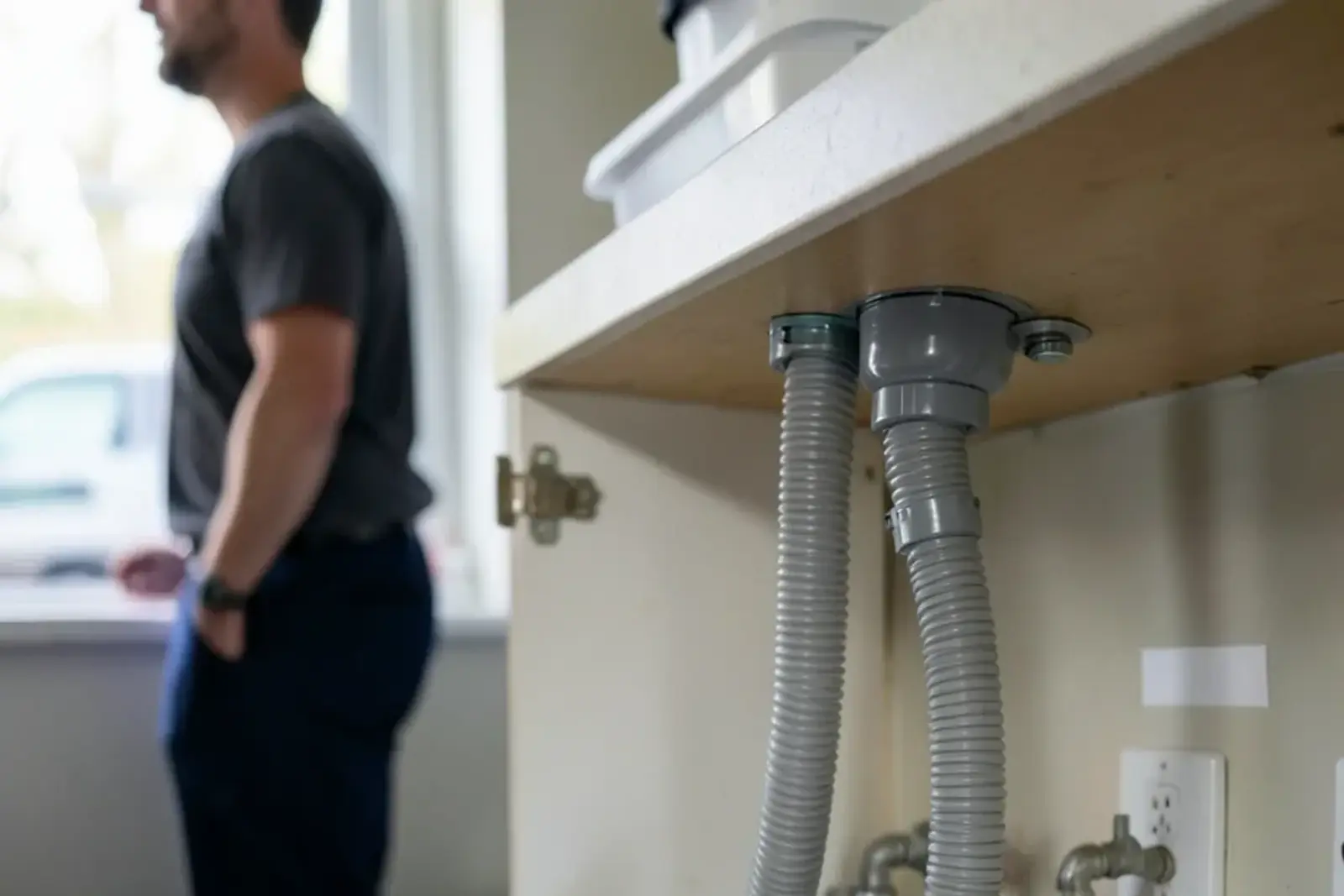
The other things we check sit under the sink. The residential code wants the dishwasher hose to rise to the underside of the counter and be fastened there before it joins the disposal, and many older installs skip that loop. The disposal's own drain has to be at least 1-1/2 inches. And past the house wall, Fraser's sewer lateral handout says fats, oils and grease "will harden and stick to the inside of pipes" on the lateral the homeowner owns all the way to the main. From there, city sewers carry everything to the Macomb County interceptor and the regional treatment plant in Detroit.
When the problem is past the disposal
If the motor hums but doesn't spin, something is jammed between the plate and the grind ring. Switch it off at the wall or unplug it. Never reach into the chamber. Most units have a hex socket in the center of the bottom, and turning it back and forth with the hex key frees the plate. Then press the red reset button and try again with the water running.
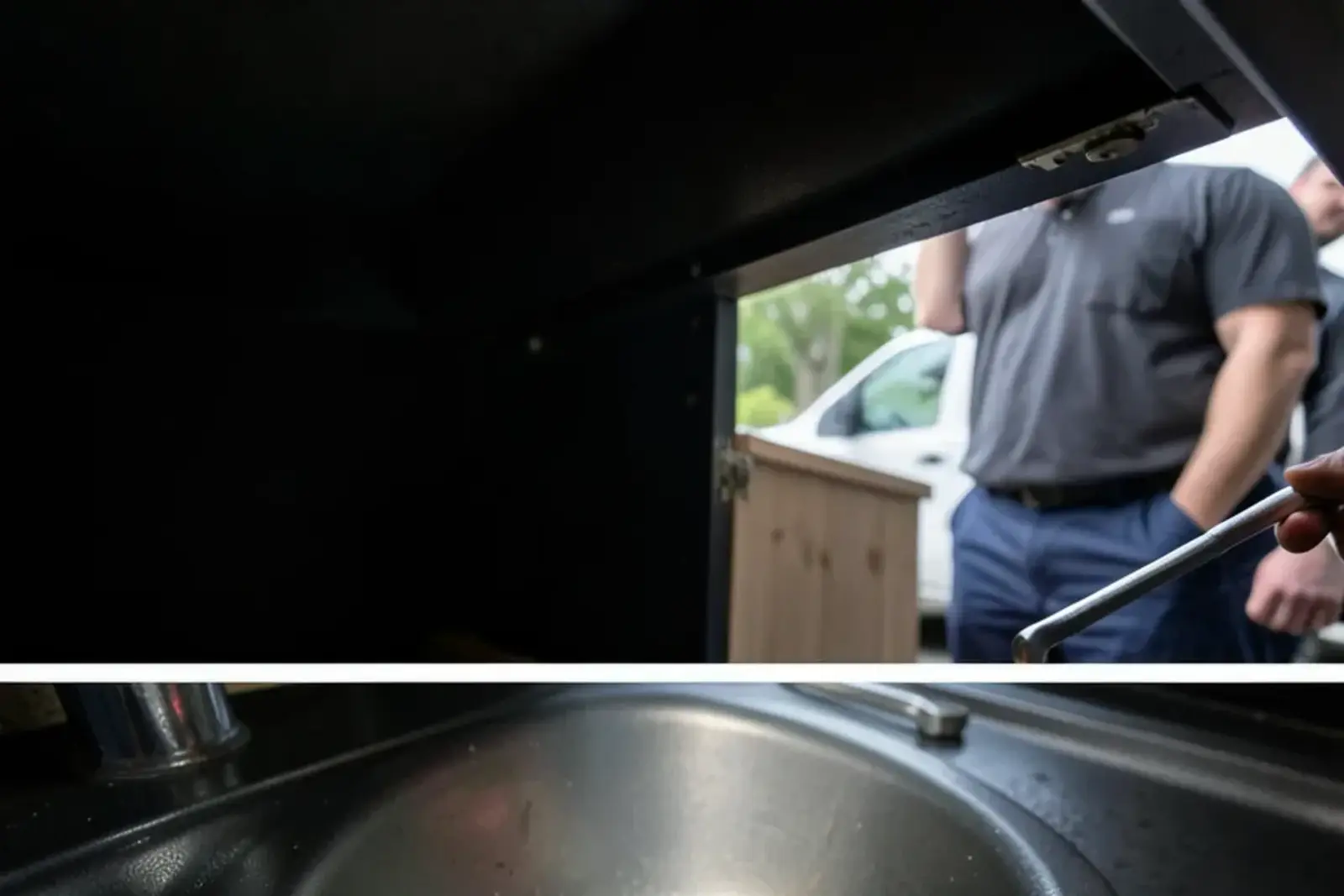
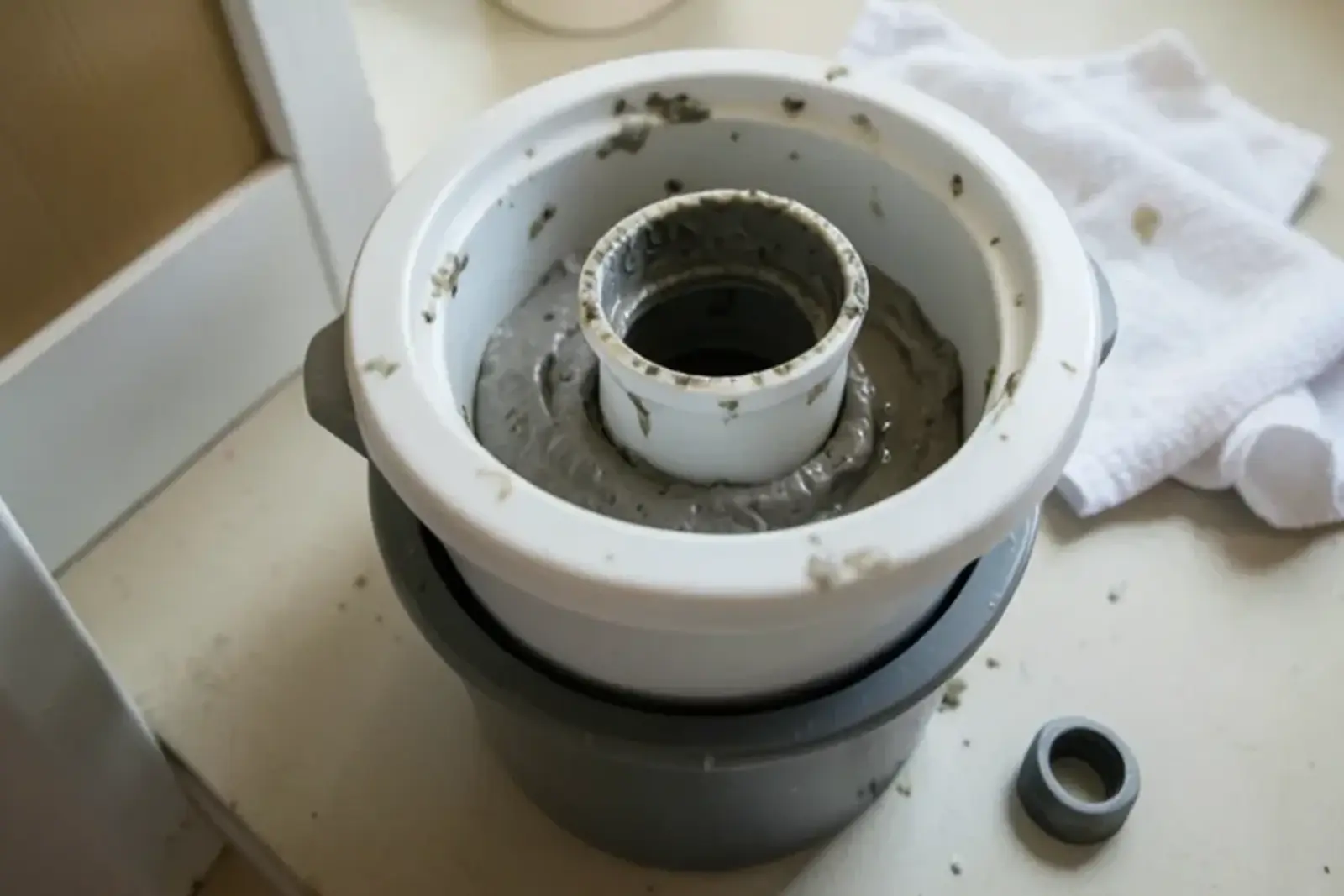
If the disposal spins but the sink still drains slowly, or water comes up in the other bowl, the blockage is in the trap or the drain line in the wall. A dishwasher that drains through the disposal will back up too. A plunger can make a mess here, and chemical cleaners rarely touch grease and starch. When a trap comes out packed with paste, the line behind it usually needs cleaning as well. Our garbage disposal repair and installation page explains how we decide between a repair and a new unit, and kitchen drain cleaning and clog removal covers the line behind it.
Leaks are a different issue. Water under the cabinet usually comes from the sink flange, the dishwasher hose connection or a cracked housing, and a cracked housing means replacement. For the rest of the sink, the dishwasher and the supply lines, see our kitchen plumbing services. If you live up in Utica, our page on plumbing help for Utica homes covers the area.
Fix it yourself or call a plumber?
Handle it yourself when the unit hums and the hex key frees it, or when one sink drains slowly after a big meal and cleaning the trap fixes it. Call when water rises in both bowls and the dishwasher, when the same clog comes back within a few weeks, or when there's water under the cabinet. If the disposal itself is done, know that Fraser's plumbing fee schedule lists a garbage disposal as a $10 fixture item, with a separate $15 electrical line, so ask whoever replaces it about the permit.
Questions about what not to put in garbage disposal
Are coffee grounds okay in a garbage disposal?
A pinch rinsed off a filter won't hurt. A full pot's worth will. Grounds don't dissolve, they settle in the trap and in low spots of the drain line, and they bind with grease into a gritty sludge. Put them in the trash or the compost. If you already ran a lot through, follow with plenty of cold water and watch for slow draining over the next few days.
Do eggshells or ice cubes sharpen the blades?
A disposal has no blades to sharpen. It uses blunt lugs on a spinning plate that throw food against a grind ring. Ice cubes can knock loose some buildup, which is harmless. Eggshells grind into a sandy grit and the thin inner membrane can wrap around the impeller, so they belong in the trash or compost.
Can I pour drain cleaner into a disposal?
We don't recommend it. Caustic cleaner sits in the grinding chamber when the drain is blocked, and it can splash back up if someone runs the unit or reaches in. It also rarely clears a grease or starch clog. Unplug or switch off the disposal, try the reset button and hex key, and call a plumber if the sink still won't drain.
Is grease okay if I run hot water and dish soap with it?
No. Hot water and detergent only carry the grease farther before it cools and sticks. The City of Fraser's sewer lateral handout warns against exactly that habit, and in Fraser the homeowner owns the sewer lateral all the way to the main in the street, so grease that sets up past the house wall is still your line to clear. Jar it and trash it instead.
Why does my dishwasher drain into the sink when the disposal is clogged?
The dishwasher usually drains through the disposal, so a packed disposal chamber or trap sends that water up into the sink bowl. A drain hose without a high loop under the counter can also let dirty sink water flow back toward the dishwasher. Clear the disposal first. If a new disposal was just installed and the dishwasher won't drain at all, the knockout plug in its inlet may still be in place.
Fraser plumbing services for this problem
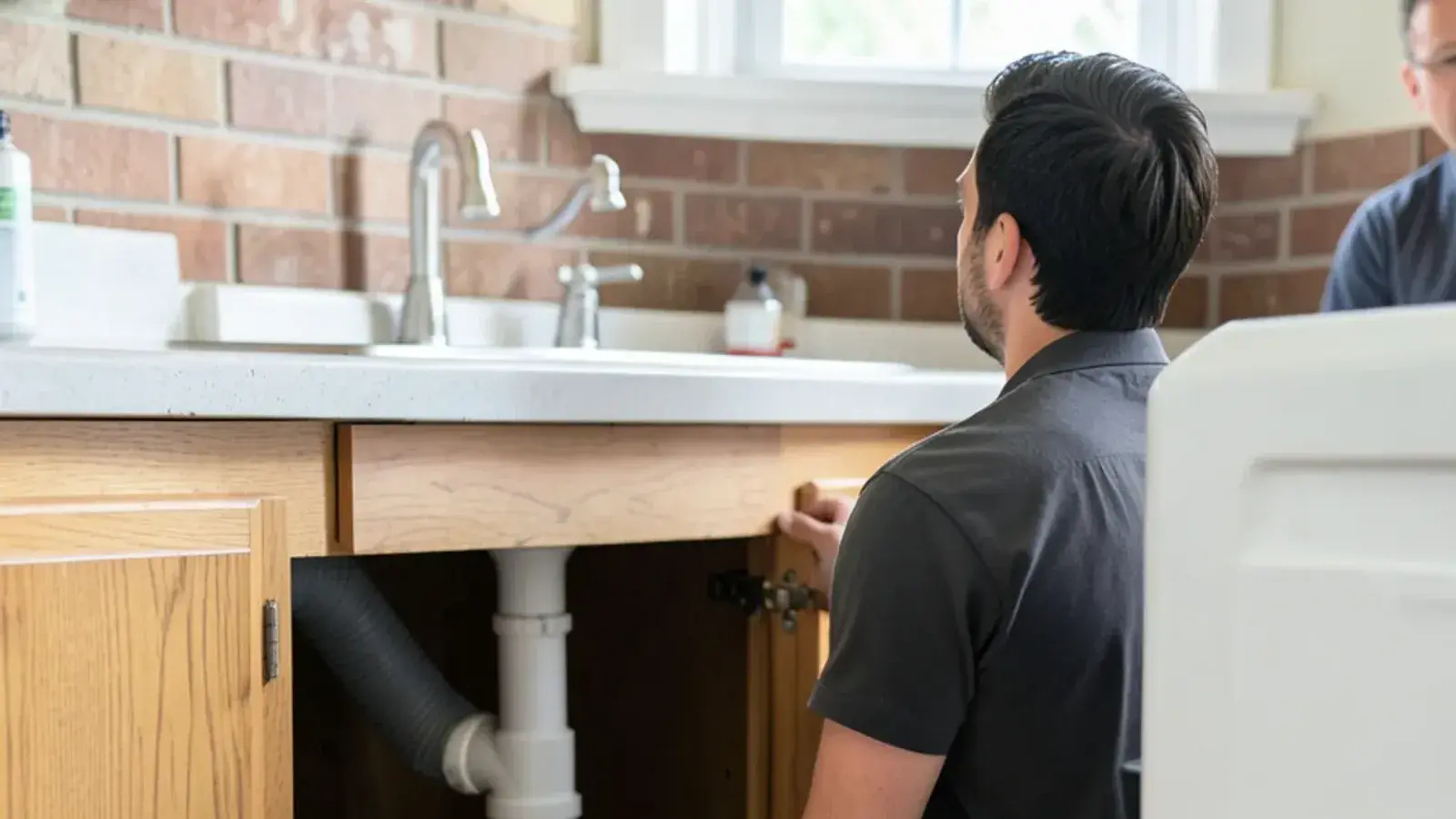
Garbage disposal installation and repair
Frees jams, stops cabinet leaks and installs new disposals with a proper dishwasher loop
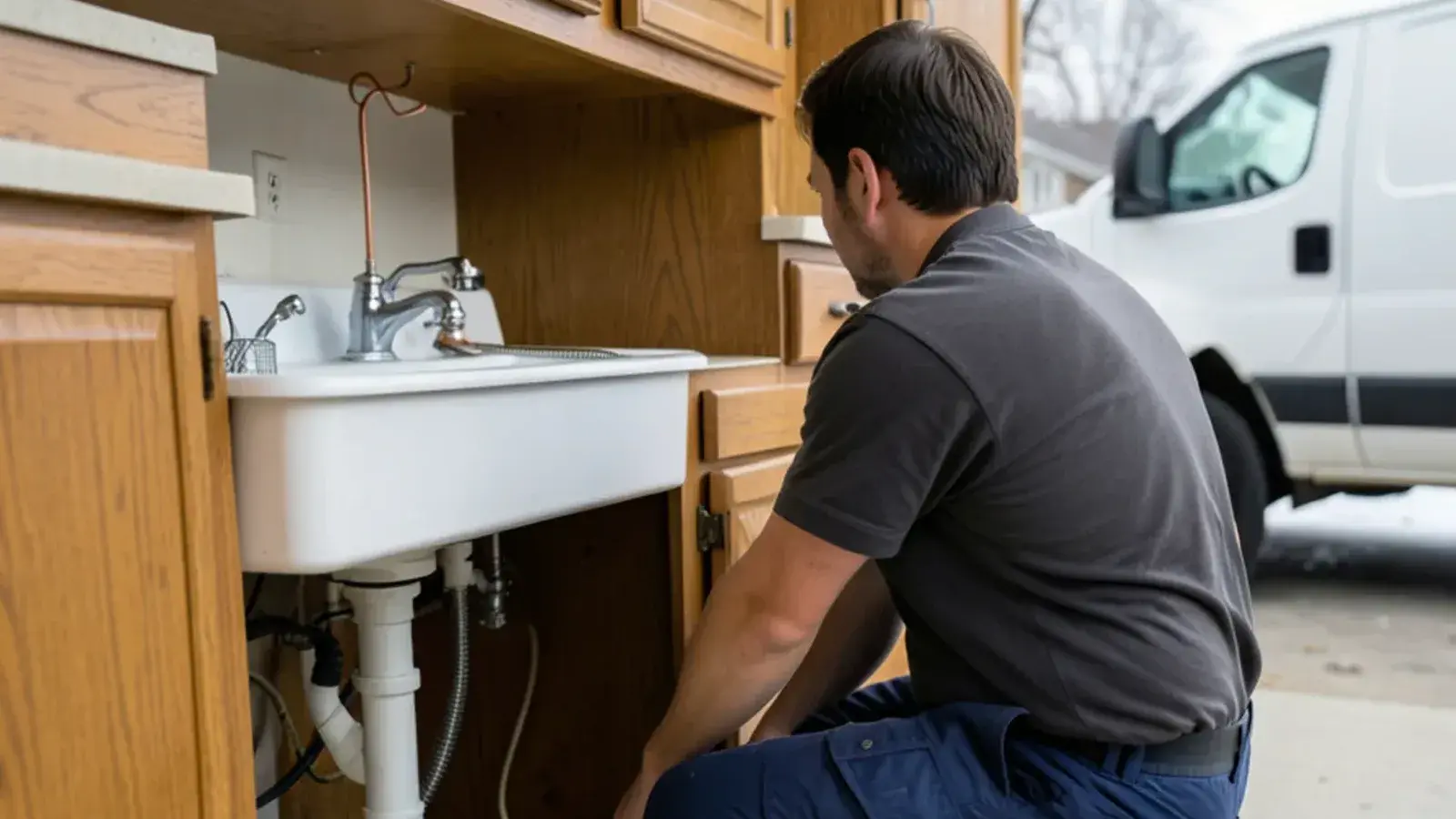
Kitchen plumbing
Sink drains, dishwasher and ice maker lines, and remodel rough-ins for Fraser kitchens

Drain cleaning and clog removal
Finds whether it's one fixture or the main line before choosing the tool