By Plumber in Fraser, MI, Fraser, MI · Published · Last updated
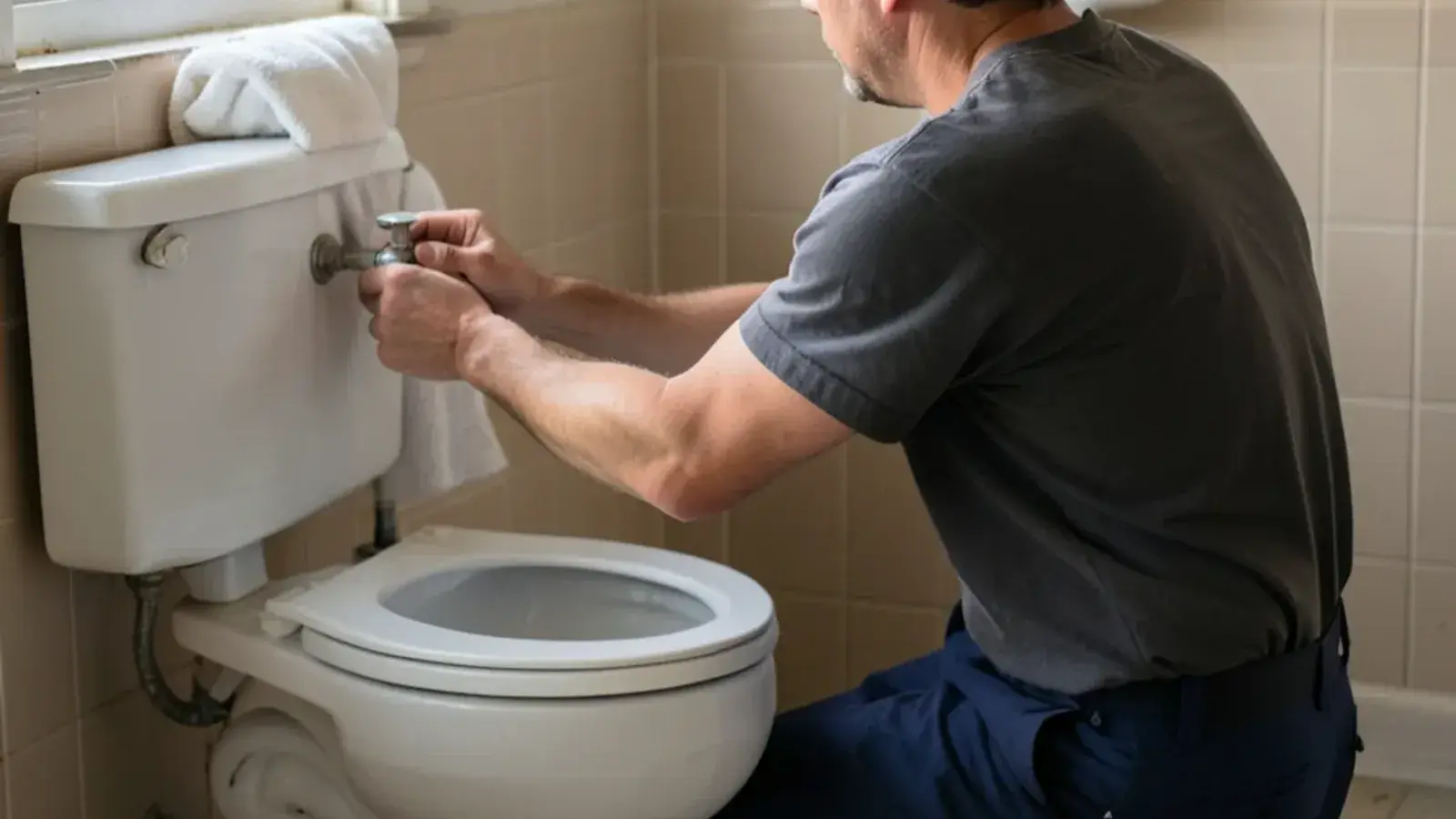
A running toilet sounds like a small thing. It's a hiss behind the bathroom door, or a refill you hear at two in the morning when nobody flushed. The water is going straight down the drain, and your meter counts every gallon of it. The good news is that a toilet tank has only a few working parts, and you can usually find the one at fault with a flashlight and some food coloring.
Confirm the leak with a ten-minute test
Before you buy parts, confirm the leak and figure out where the water is going. The EPA's WaterSense program describes a simple dye test on its Fix a Leak Week page.
- Take the lid off the tank and set it somewhere soft.
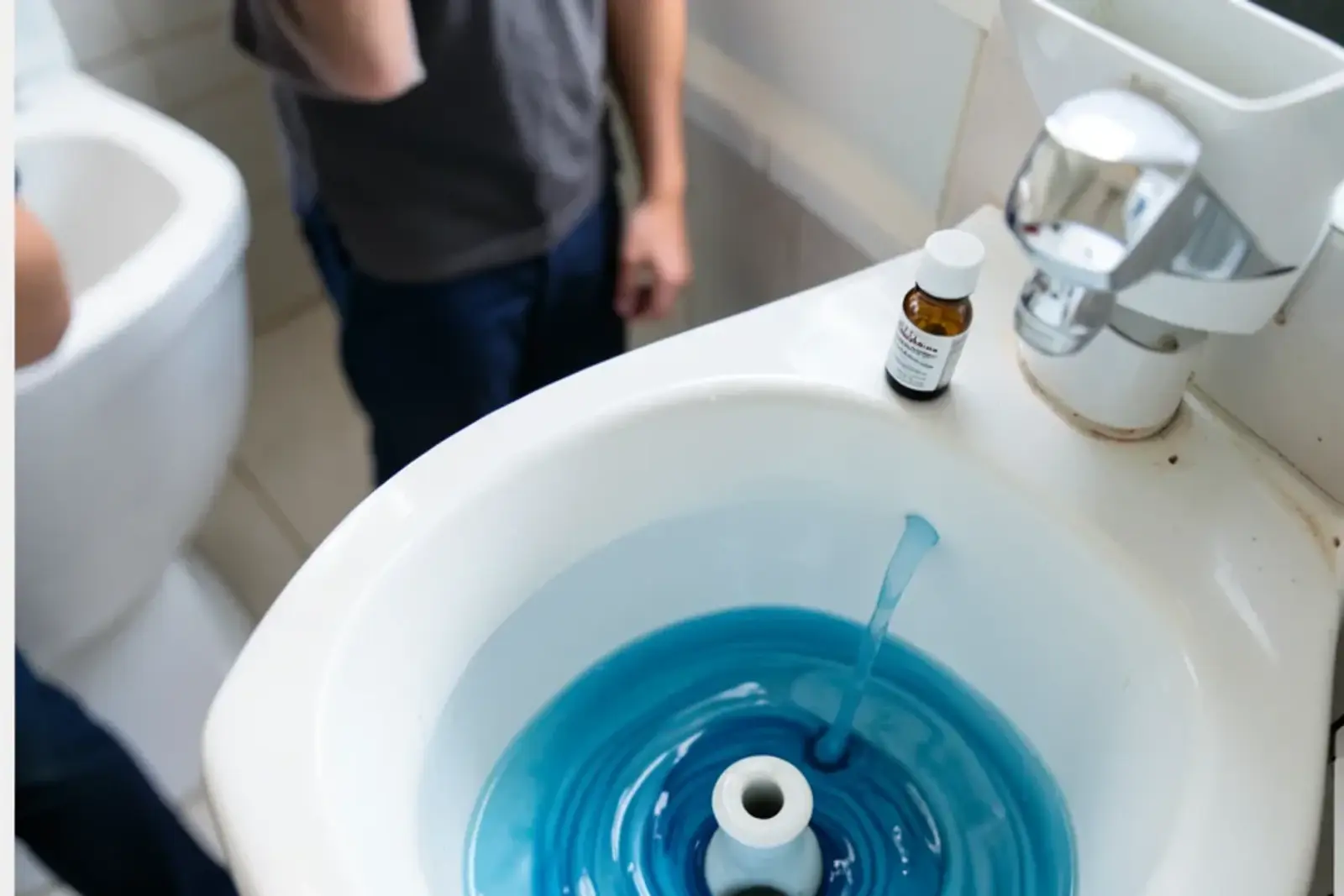
- Add a few drops of food coloring to the tank water. Don't flush.
- Wait 10 minutes.
- Look in the bowl. Any color there means water is leaking past the flapper or the flush valve.
- Flush right away so the dye doesn't stain the tank.
If the bowl stays clear but you still hear running, look at the overflow tube. Water spilling into the top of that tube means the fill valve isn't shutting off, which is a different problem with a different fix.
The tank parts that cause a toilet to run
Nearly every running toilet comes down to one of these. Match what you see to the likely cause.
| What you notice | Likely cause | Typical fix |
|---|---|---|
| Color in the bowl during the dye test | Worn, warped or dirty flapper | Clean the seat and replace the flapper |
| Toilet refills by itself every so often | Slow leak past the flapper or a pitted flush valve seat | New flapper, or a new flush valve if the seat is damaged |
| Water trickling into the top of the overflow tube | Float set too high, or a fill valve that won't shut off | Lower the float, or replace the fill valve |
| Hissing that never stops, even with the water below the tube | Worn fill valve seal | Replace the fill valve |
| Flapper won't close after a flush | Chain too short, tangled or caught under the flapper | Adjust the chain so it has a little slack |
| Water level drops, no dye in the bowl, damp floor | Leak at the tank bolts, the supply line or a cracked tank | Tighten or replace bolts and washers, or replace the tank |
The flapper
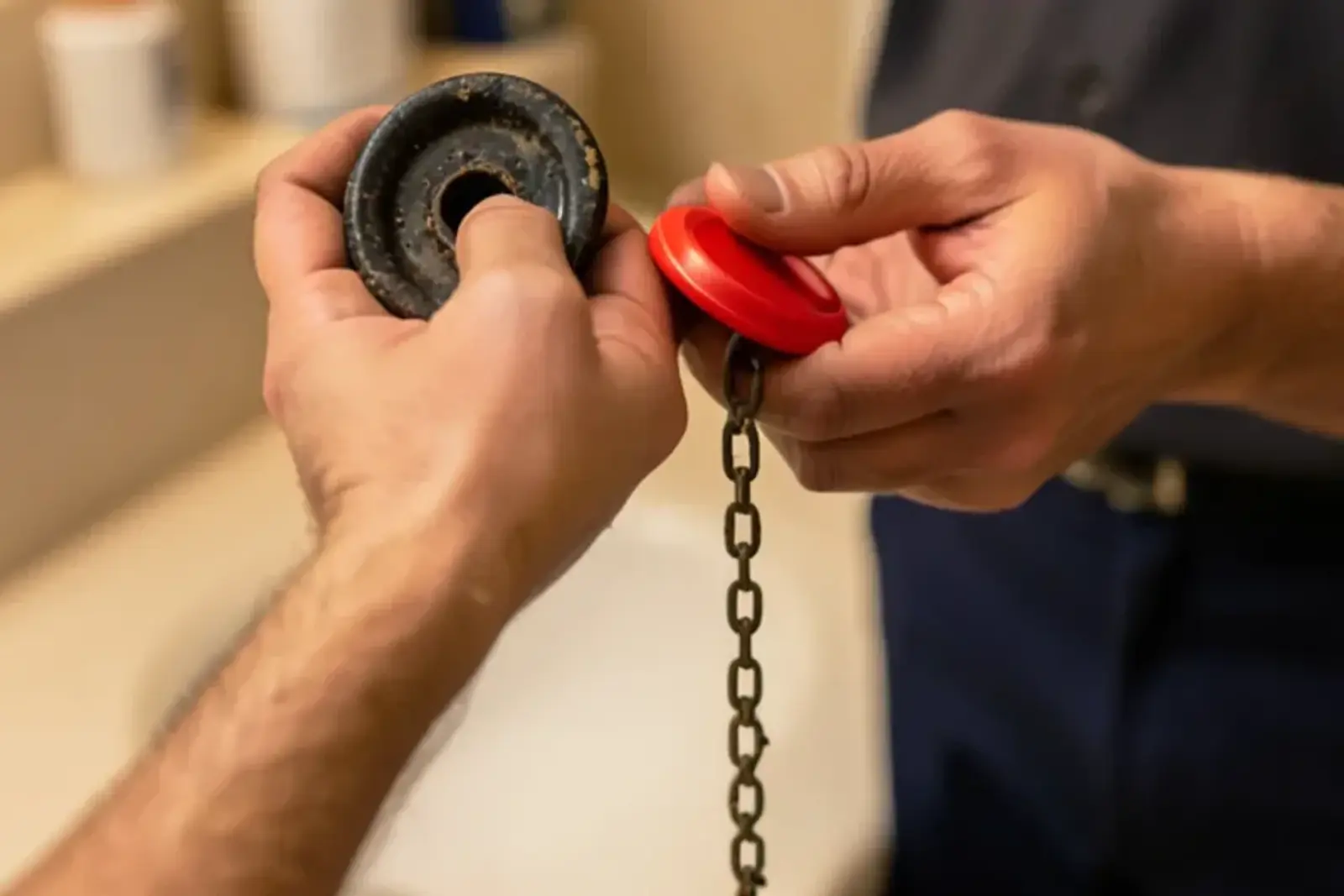
The flapper is the rubber seal at the bottom of the tank. It lifts when you flush and drops back to hold water in the tank. EPA's residential toilets page says most toilet leaks come from old or worn flappers. Rubber softens and warps with age, and minerals build up on the seat it presses against.
The fill valve and float
The fill valve is the tall assembly on one side of the tank, and the float tells it when to stop. If the float is set too high, the water rises past the top of the overflow tube and drains away nonstop. If the valve's seal is worn, it never fully closes even when the float is set right.
The flush valve and chain
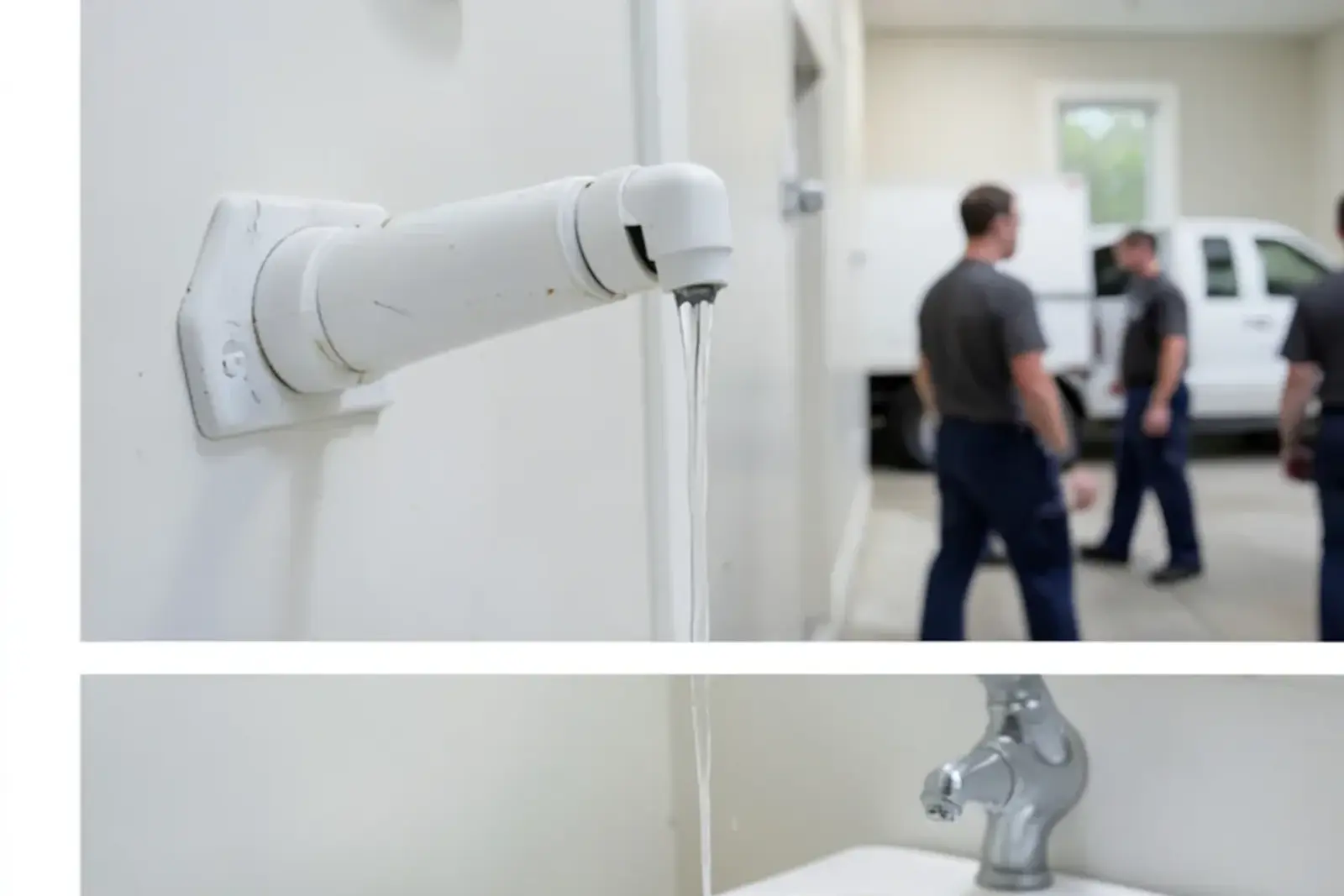
The flush valve is the seat the flapper seals against, usually built into the base of the overflow tube. A chain with no slack holds the flapper slightly open. A chain with too much slack can get trapped under it. Either way, water keeps escaping.
What all that running water adds up to
Here's where the hiss gets expensive. According to EPA WaterSense statistics, household leaks waste an average of 180 gallons a week, or about 9,400 gallons a year, and EPA's residential toilet page points to toilets as a frequent culprit. EPA also reports that nine percent of homes have leaks wasting 50 gallons or more every day, and that one bad flapper alone can lose thousands of gallons a year without making a sound.
Toilets already use nearly 30 percent of the water inside an average home, according to EPA. A leak rides on top of that.
If your city bills sewer from the same meter reading as water, as Mount Clemens explains on its water and sewer page, every wasted gallon is billed twice. Center Line's public works page sends water and sewer billing questions to city hall, so that's the office to ask about how your own bill is figured.
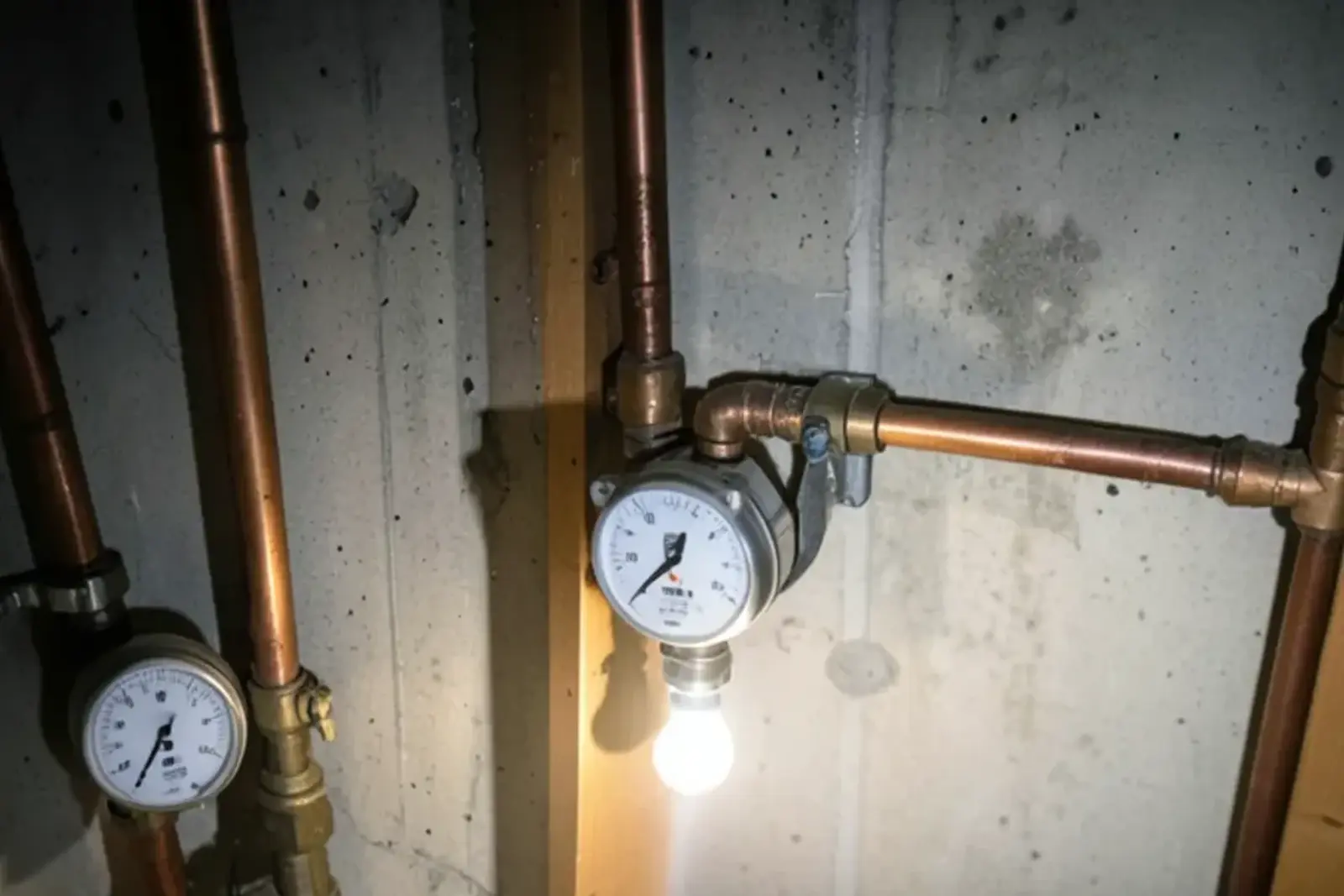
You can check the whole house too, and it's the same first step a leak detection and repair visit starts with. Write down the meter reading, use no water anywhere in the house for two hours, and read it again. EPA's advice is that any change at all means a leak. EPA also says a family of four using more than 12,000 gallons a month in January or February probably has a serious leak, because winter is when outdoor watering isn't hiding anything.
Fix the flapper yourself or call for a repair
A flapper swap is a fair do-it-yourself job.
1. Shut off and drain the tank
Turn the supply valve under the tank clockwise until it stops, then flush and hold the handle down to empty the tank.
2. Remove the old flapper
Unhook the chain from the handle arm and slide the flapper's ears off the pegs on the overflow tube.
3. Match and install the new one
Take the old flapper to the store, since width matters. Clean the seat with a soft scrub pad, hook on the new flapper, and leave about half an inch of slack in the chain.
4. Refill and retest
Open the supply valve, let the tank fill, and run the dye test again.
Call for help if the supply valve won't turn or drips when you touch it, if the seat is cracked, or if the tank leaks at the bolts. Those jobs mean working on old shutoffs and porcelain, and a stuck valve can break. Our toilet repair and installation page explains what a visit covers, and our page on plumbing in Center Line covers the area.
What we see behind older toilets in Fraser and Center Line
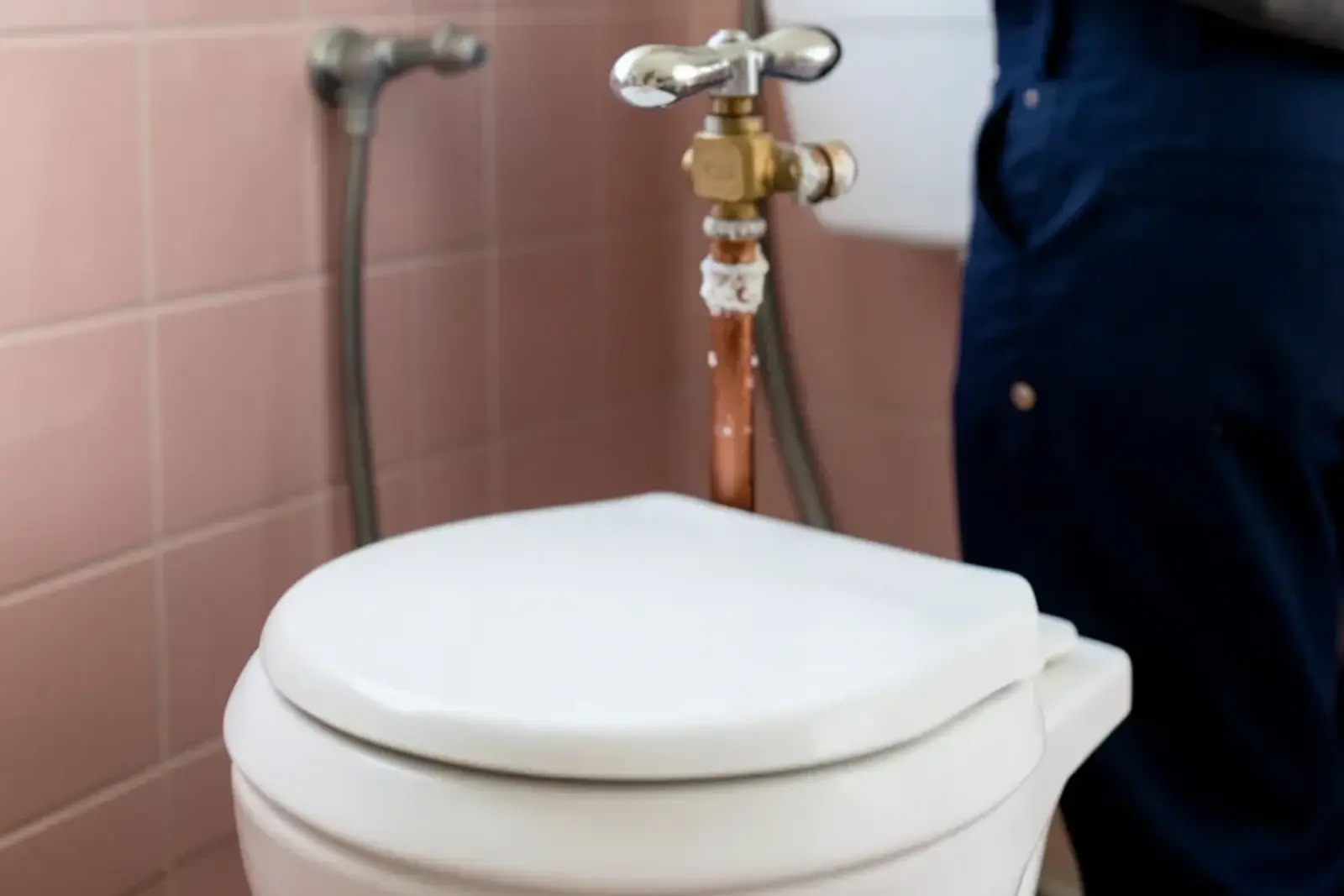
Fraser's housing runs heavily to 1950s through 1970s ranches, split-levels and condos, and in Center Line about half the homes predate 1960. A lot of those bathrooms still have their original shutoff valve behind the toilet, and that valve decides how a simple flapper job goes. An old multi-turn stop that hasn't moved in years can seize, or start leaking at the stem the moment it's turned. Replacing it adds a little time to the repair, but the residential code wants every toilet to have an accessible shutoff, and one that doesn't work isn't much of one.
The water matters too. Fraser and its neighbors get Lake Huron water through GLWA's Northeast and Lake Huron plants, and GLWA's 2025 mineral analysis for those plants, printed in Clinton Township's water quality report, averages about 105 mg/L of hardness, roughly 6 grains per gallon. That's moderately hard, enough to leave scale on a fill valve seal or the flush valve seat over the years. It's why cleaning the seat before a new flapper goes on matters as much as the flapper.
Two smaller causes show up often. The first is a refill tube pushed down inside the overflow tube below the water line, which can siphon tank water down the overflow without a sound. Clip it so its end sits above the tube's rim. The second is drop-in cleaning tablets that sit in the tank against the rubber all day. If a flapper keeps failing early and you use them, stop.
In rentals, a running toilet can go unreported for months because the tenant isn't paying the bill. Nearly half of Center Line households rent, so landlords there have reason to run the dye test at every turnover.
When replacement makes more sense than another repair
Some older toilets use up to 6 gallons per flush, according to EPA. The current federal standard is 1.6 gallons, and WaterSense-labeled models use 1.28 gallons or less. If a toilet from that older era needs a new flush valve, a new fill valve and tank bolts all at once, replacing it may make more sense than rebuilding it. EPA estimates the average family saves nearly 13,000 gallons a year by replacing old toilets with WaterSense models.
So the decision is simple. One worn part on a toilet that already uses 1.6 gallons or less: repair it. Several parts at once on a high-volume older toilet, or a cracked tank: replace it. In Fraser, a new toilet goes on the plumbing permit as a $10 fixture item on the city's fee schedule, so ask whoever installs it about the permit.
Questions about toilet keeps running
Why does my toilet refill for a few seconds every so often when nobody used it?
That's often called a phantom flush. Water is slowly seeping from the tank into the bowl past the flapper or a worn flush valve seat. When the tank level drops far enough, the fill valve kicks on to top it up. The dye test confirms it, and a new flapper fixes most cases. If a new flapper doesn't stop it, the seat it presses against may be pitted or cracked.
How many years does a toilet flapper last?
The EPA's WaterSense program suggests checking the flapper periodically and replacing it at least every five years, since the rubber wears out. Chlorine and hard water can shorten that. Bring the old one or a photo to the hardware store, because flappers come in different widths, and some have a float that also needs to match.
Is a running toilet an emergency?
Usually not. It wastes water but won't flood the house by itself. Turn the oval valve under the tank clockwise to stop it until it's fixed. It does become urgent if the bowl is overflowing, water is leaking from the base or the tank, or the shutoff valve itself won't close or is dripping.
Is a running toilet really wasting much water?
Yes, it can be. How much depends on the leak. EPA says a worn flapper can silently leak thousands of gallons a year, and a fill valve spilling into the overflow tube is usually the bigger loss because it runs nonstop. The way to put a number on your own house is the meter test, read before and after two hours with no water in use. Any movement means water is going somewhere.
Should I replace the flapper and fill valve at the same time?
Often, yes, on an older toilet. Both are rubber and plastic parts wearing out on the same schedule, and the tank is already shut off and drained for one of them. Replacing both in one visit avoids a second repair a few months later. On a newer toilet with a clearly warped flapper and a fill valve that shuts off cleanly, the flapper alone is enough.